
How Does A Train Engine Work?
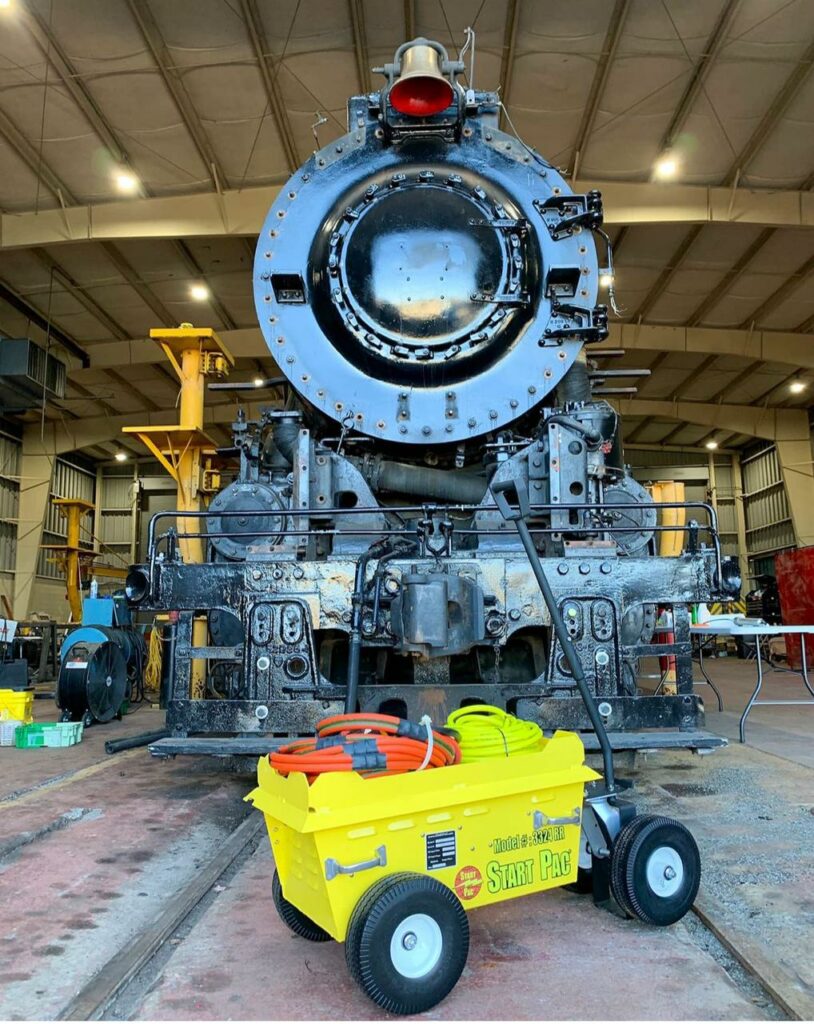
Have you ever found yourself mesmerized by the sight of a formidable train racing along the railway? It is truly a marvel of technological design, yet the intriguing mechanisms that enable its locomotion are rather captivating! The real question is, how does a train engine work? Let’s explore the world of train locomotives and learn how these impressive apparatuses transport carriages over extensive distances. Basic Principles of Train Engines Irrespective of their variant, all train locomotives adhere to a fundamental principle: the transformation of an energy source (such as fuel or electricity) into mechanical power, which in turn drives the wheels. It is this mechanical force that generates the necessary motion for the forward movement of the train. Types of Train Engines As time has passed, advancements in train technology have occurred, resulting in the emergence of various types of train engines. Here is a comprehensive overview of the primary contenders: Steam Engines: The predecessors of train engines, these formidable machines operated by burning coal or wood. A boiler was used to heat water, generating steam that propelled pistons in a reciprocating motion. This rotational movement was then translated into wheel rotation through a complex arrangement of gears and rods. It can be compared to an enormous teapot mounted on wheels, exuding great power! Although largely replaced due to their lack of efficiency and negative environmental effects, they are deeply rooted in the annals of railway history. Diesel Engines: The prevalent form of locomotive power, parallel car engines operate by combusting diesel fuel to generate energy. However, unlike traditional car engines, where power is transmitted directly to drive the wheels, diesel engines produce electricity that propels electric motors positioned on the axles. This diesel-electric transmission system enhances efficiency and grants superior control capabilities. Electric Engines: Known for their streamlined and noiseless operation, electric trains derive their energy directly from an external source of electricity, typically obtained from a third rail or overhead cables. They then convert this electricity into locomotive battery voltage. These engines are particularly well-suited for urban settings because they produce no emissions during operation. Key Components of a Train Engine To gain an understanding of the functionality of a train engine, let’s delve into its fundamental elements: Fuel System: The fuel system is responsible for providing the engine with its essential energy source, whether it may be diesel fuel, coal utilized in a steam engine, or even electricity required for an electric engine. Transmission System: This crucial mechanism harnesses the energy generated by the engine and transforms it into a suitable format for propelling the wheels. In diesel engines, this function is carried out by the electrical system responsible for energizing the traction motors. Steam engines, on the other hand, rely on an intricate arrangement of gears and rods to fulfill this role. Control Systems: The presence of the conductor serves a purpose beyond mere representation! The control systems enable the engineer to manage the locomotive’s velocity, braking, and course. This could entail levers, buttons, or even interfaces controlled by computers. Working of a Train Engine Now, it’s time to answer our main question here, how does a train engine work? Let’s witness the implementation of these components together! Starting Up: Steam Engine: The boiler is fired up, and water is heated to create steam. As pressure builds, the engine is slowly “woken up” to avoid any damage. Diesel Engine: The diesel fuel system primes, and the engine cranks to life, similar to starting a car. Electric Engine: The connection to the external locomotive power supply is established, and the engine is ready to go. Running: Steam Engine: The steam pushes pistons back and forth, which through a series of gears and rods, turns the wheels. The fireman keeps the fire burning to maintain steam pressure, and the engineer controls the flow of steam to regulate speed. It’s a very hands-on experience! Diesel Engine: The engine runs, generating electricity. This electricity powers the traction motors on the axles, which, in turn, rotate the wheels. The engineer controls the engine’s output and the amount of electricity sent to the motors, determining the speed. Electric Engine: The electricity from the external source powers the traction motors, which directly turn the wheels. The engineer controls the amount of electricity delivered to the motors, adjusting the speed. Stopping: Steam Engine: The engineer reduces the flow of steam to the pistons, slowing the engine down. Brakes are then applied to the wheels for a complete stop. Diesel Engine: The engine power is reduced, and the electrical current to the motors is decreased. Brakes are then applied for a full stop. Electric Engine: The connection to the external power source is interrupted, and the traction motors stop receiving electricity. Brakes are then applied for a complete stop. Energy Conversion Processes: As you can see, each engine type undergoes a unique energy conversion process: Steam Engine: Chemical energy (coal/wood) -> Heat energy (burning fuel) -> Thermal energy (steam creation) -> Mechanical energy (piston movement) -> Rotational energy (wheel turning) Diesel Engine: Chemical energy (diesel fuel) -> Mechanical energy (piston movement) -> Electrical energy (powers traction motors) -> Rotational energy (wheel turning). Electric Engine: Electrical energy (from external source) -> Rotational energy (wheel turning) Modern Innovations in Train Engine Technology Train engines are continuously developing, incorporating novel technologies to enhance efficiency, decrease emissions, and enhance overall performance. Here are a few noteworthy advancements: Hybrid locomotives encompass the integration of diesel engines alongside electric motors and locomotive battery During the initiation or operation at lower velocities, they possess the capability to depend on battery power solely or a blend of electric and diesel power, thus leading to a reduction in both fuel consumption and emissions. Magnetically levitated trains, commonly known as Maglev trains, utilize magnets to hover above the tracks, resulting in the elimination of friction. This enables them to reach exceptionally high speeds and provide a more comfortable journey. However, it should be noted that this technology is still in the developmental stage and