

What Causes Plane Crashes? Surprising Impact of Ground Power Quality
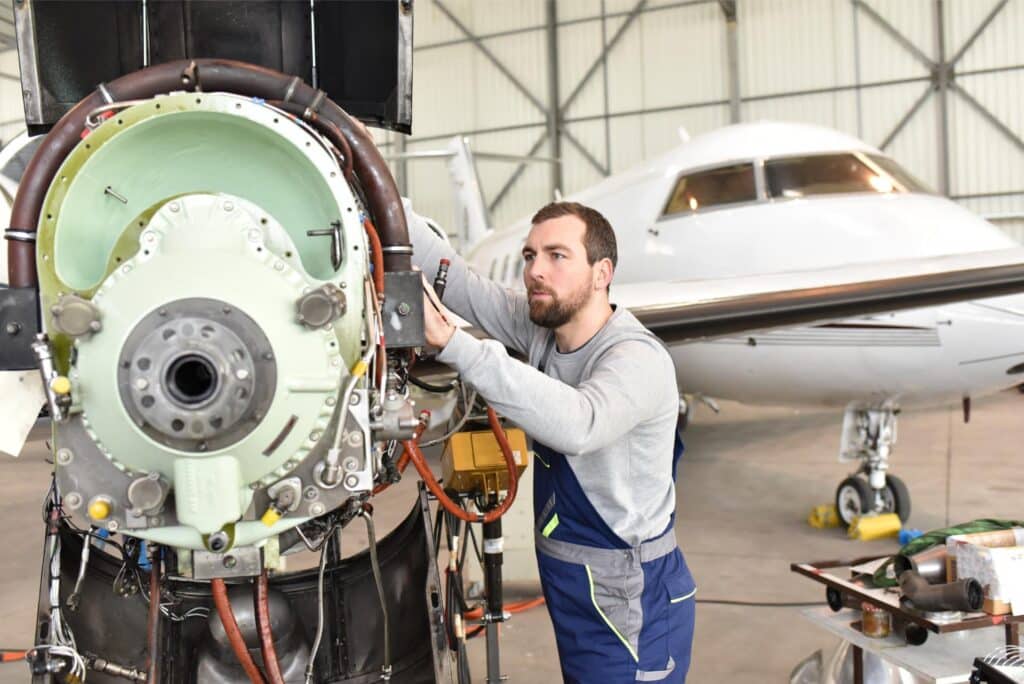
Aviation accidents are complex, the final act of a story that began weeks or even years earlier. The public seeks a single reason, but the truth is a chain of failures, ignored warnings, and hidden flaws. Understanding what causes plane crashes means pulling that chain apart. Most of those links are forged in the sky. But some are born on the ground, in a place few ever think to look. This is the story of how those failures happen, what the latest data tells us, and how the quality of electricity at the gate can become a critical, overlooked vulnerability. The real answer to why planes crash lies in these hidden connections. What Causes Plane Crashes? An Overview When investigators walk a crash site, they are reading the final page of a long, complex story. The preceding chapters are written in maintenance logs, training records, and weather reports. While every accident is unique, the root aviation accident factors tend to fall into a few key categories. These categories answer the most critical question: what are the main causes of plane crashes? Human Factors and Pilot Error: The blame often lands on the pilot. It’s the easiest answer, and statistics seem to back it up, citing human factors in over half of all accidents. But “pilot error” is a lazy term. It rarely describes a single bad move, but rather a crew fighting cascading system failures or a pilot battling spatial disorientation. It’s the point where human psychology meets machine logic under unbearable stress. Mechanical Failure: An airliner is a marvel of reliability, but not immortal. Metal fatigues, wires chafe, and seals break. Mechanical failure is the primary plane crash cause in roughly one-fifth of accidents. It could be a catastrophic engine failure or something more sinister: a slow, creeping crack in a turbine blade, invisible until the moment it lets go. Weather Conditions: Though engineered for extreme conditions, aircraft have limits. Weather is a direct cause in 11% of crashes, but more often acts as a great amplifier. Weather creates the ice that chokes engines, the wind shear that robs planes of lift, and the turbulence that turns small problems into disasters nobody can control. That’s how most weather crashes happen. Sabotage: The rarest cause is the most chilling. Intentional acts, from bombs to deliberate crashes, are a constant, low-level threat. They prove that not all dangers come from physics or engineering; some come from the dark corners of human intent. Runway and Takeoff/Landing Incidents: An aircraft is most vulnerable when closest to the earth. Takeoff and landing are statistically the most dangerous phases of flight. It is in these critical minutes that runway incursions, unstable approaches, or sudden crosswinds can create a crisis with no altitude and no time to recover. Ground and Air Traffic Errors: The safety net extends far beyond the cockpit. A single air traffic control error can place two jets on a collision course. A rushed technician can miss a critical step, which is why the culture surrounding aircraft maintenance is so vital. An error on the ground can set a trap that won’t spring until hours later, at 35,000 feet. What Are the Main Causes of Recent Plane Crashes? The data from 2024 and early 2025 sent a clear warning to the industry. So, what are the main causes of recent plane crashes? The International Civil Aviation Organization (ICAO) recorded 95 accidents in 2024. According to their findings, two main problems keep causing fatalities: pilots losing control of aircraft mid-flight and planes getting too close on runways. We saw this play out tragically last year when a Japan Airlines A350 crashed into another aircraft during landing at Tokyo’s Haneda airport, a catastrophic failure of ground operations. January’s mid-air collision over the Potomac River and February’s commuter plane crash in Alaska showed that aviation accidents don’t have just one cause. Instead, air traffic control mistakes, pilot errors, and equipment breakdowns create a tangled mess of problems that airlines are always trying to sort out. The Overlooked Factor: Ground Power Quality as a Plane Crash Cause The search for answers to why planes crash usually looks to the sky. This is a mistake. A critical vulnerability is born on the tarmac, plugged into the side of the aircraft. The Power Connection: Before every flight, a plane connects to an aircraft ground power unit (GPU). This machine is the plane’s life support on the ground. It runs the lights, the computers, and the navigation systems. This routine, mundane piece of equipment can be a killer. This is precisely why airlines and regulators treat ground support equipment (GSE) maintenance not as a logistical task, but as a flight-critical safety function. Without rigorous oversight, the systems meant to prepare an aircraft for flight can become the origin of a latent failure. The Threat of “Dirty” Power: A modern jet is a flying network of sensitive computers. They demand clean, stable electricity. If a GPU delivers “dirty” power with voltage spikes or frequency shifts, it poisons the aircraft’s electronics. The damage is silent. No alarms go off. It just leaves behind a hidden weakness, a digital time bomb waiting for the right stressor to detonate. How Poor Ground Power Can Lead to Catastrophic Failures It’s like using a cheap phone charger; it works, but over time, it destroys the battery. On an aircraft, the stakes are infinitely higher. The Voltage Spike: A sudden surge of electricity from a faulty GPU can fry a microprocessor. It can weaken a circuit board in the flight control system. The part won’t fail then and there. It will fail later, under the strain of flight, when it’s needed most. Understanding how an aircraft ground power unit works is not just a question for mechanics, but a core safety concern. The Frequency Drift: Aircraft electronics need power at a perfect 400 Hz. If that frequency wavers, it can corrupt software or cause systems to desynchronize. The navigation system might start to drift. The autopilot