
A Comprehensive Guide to Airplane Systems and How They Work
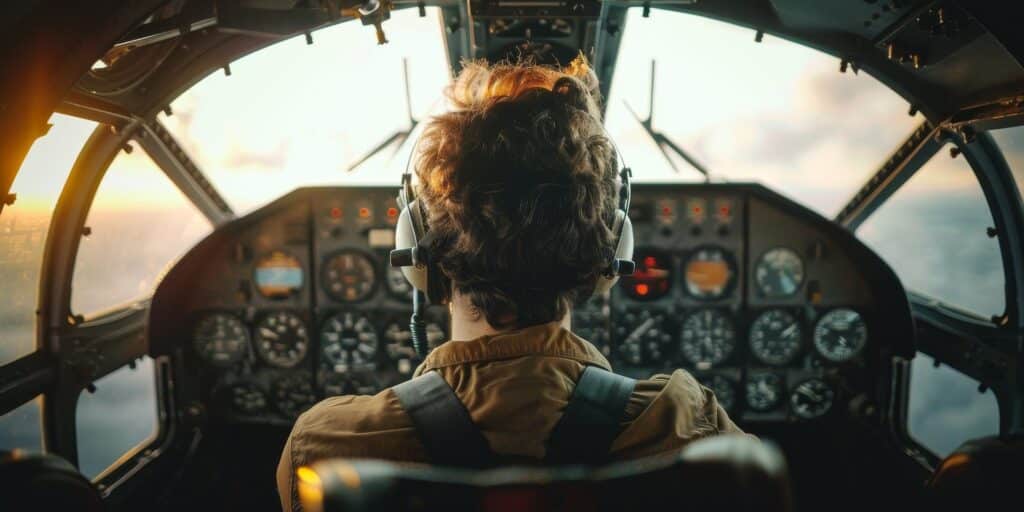
From the outside, a modern airliner looks like a single, seamless piece of engineering. That’s fiction. The truth is, an airliner is a collection of thousands of airplane components and hundreds of independent systems, all interconnected and forced to trust each other completely. The real story of flight happens in this hidden world: a dense network of wires, pumps, and computers. What Are Airplane Systems? To understand an aircraft, you have to see it as a complex system, not a single machine. Its countless subsystems fall into four fundamental domains: mechanical, electrical, hydraulic, and avionics. The airframe is the mechanical skeleton, power flows through miles of specialized wiring, typically copper, and hydraulic fluid moves through high-strength lines of steel, titanium, or aluminum alloy. But more important than any single part is the web of interaction governed by a foundational philosophy: redundancy. Every critical function is performed by two, and often three, separate systems working in parallel to back each other up. This fanatical approach to backups transforms a collection of parts into something you can trust: a machine that can absorb multiple failures and still land safely. Major Airplane Systems and Their Functions Six major systems do the heavy lifting. Each is a world of its own, but they have to work as a team. Flight Control Systems Flight controls are the pilot’s hands on the air, using clever surfaces to redirect airflow and steer the aircraft. Three main flight control components do most of the work: Ailerons: Positioned on the trailing edge of each wing, they work in opposition. When the pilot turns the yoke, one aileron moves up to spoil lift while the other moves down to increase it. This deliberate imbalance of force is what rolls a 100-ton aircraft into a bank. Elevators: Located on the horizontal tail, these panels pitch the nose up or down. This controls the aircraft’s angle of attack, which in turn manages the rate of climb or descent. Rudder: The moving part of the vertical tail, the rudder is all about discipline. It stops the nose from wandering side-to-side in a turn (a phenomenon called adverse yaw) and keeps the plane flying true, especially when fighting a crosswind on landing. Then there are the helpers. Flaps and slats are shape-shifters for the wing. They extend out for slow-speed flight, creating a deeper curve that generates the massive lift needed for takeoff and landing. Without them, landing speeds would be dangerously high. Spoilers are the opposite; these are panels that pop up on touchdown to kill whatever lift remains and pin the aircraft to the runway. Electrical Systems Every wire has a job, from powering essential systems to carrying data signals at the precise aircraft voltage required by each component. Key airplane electrical components like engine-driven generators supply the main power, with an Auxiliary Power Unit (APU) in the tail as backup. If a generator quits, automatic contactors instantly reroute power from another source. Most large aircraft use a dual voltage system. A 28-volt DC system powers essential avionics and control circuits, while a more powerful 115-volt AC system runs high-load items like galley ovens and large pumps. Understanding these specific requirements is key to grasping the complexity of the power distribution network. Without a stable, fault-free aircraft electrical system, none of the aircraft’s critical avionics, lighting, or communication equipment could operate. Hydraulic Systems This is where the aircraft gets its muscle. Hydraulics use the principle that force applied to a trapped fluid is transmitted perfectly. This system takes the modest power of a pump and multiplies it into an unstoppable force, typically pressurized to 3,000 pounds per square inch (psi). This is how a pilot, with a small lever movement, can retract tons of landing gear against a 200-mph wind. The airplane hydraulic system is brute force, tamed and directed by a network of pressurized lines and actuators. Because it’s so critical, there are always multiple, independent hydraulic systems (often designated Blue, Green, and Yellow). One or even two can fail, and the aircraft can still be flown and landed. As a final backup, some aircraft have a Ram Air Turbine (RAT), a small propeller that drops out into the airstream to generate emergency hydraulic pressure. Fuel Systems The fuel system is a complex fluid management and balancing act. Fuel is stored in multiple tanks, primarily within the wings and sometimes a central fuselage tank. A network of pumps and valves moves the fuel, not only to ensure a constant supply to the engines but also to manage the aircraft’s center of gravity. During a long flight, fuel is strategically pumped between tanks to manage bending forces on the wing structure. The aircraft fuel system must keep the engines fed regardless of the aircraft’s attitude. Boost pumps inside the tanks ensure a positive pressure flow, preventing fuel starvation. Avionics Systems Avionics, a mix of “aviation” and “electronics,” handle navigation, communication, and monitoring. The “glass cockpit” of a modern airliner is the most visible part of the avionics systems in airplanes. Large LCD screens have replaced hundreds of analog gauges, displaying data from GPS, ground aids, and sensors. These sophisticated displays require precise aircraft voltage regulation to function reliably, as any power fluctuation could compromise critical flight data. This suite includes the Flight Management System (FMS), the brain for the flight plan, and the Traffic Collision Avoidance System (TCAS), which communicates with other aircraft and will command pilots to “Climb” or “Descend” to prevent a collision. Environmental Control Systems At 37,000 feet, the outside air is a lethal, sub-zero vacuum. The Environmental Control System (ECS) creates a bubble of life inside the cabin. It’s a life support system. It draws incredibly hot, high-pressure “bleed air” from the engine compressors. This air is routed to air conditioning units (PACKs), which use heat exchangers and turbines to cool it. It’s then fed into the cabin. A controlled outflow valve releases pressure at a constant rate, keeping the cabin at a safe equivalent of about