

Leonardo Helicopters: Power Requirements & Ground Support Guide
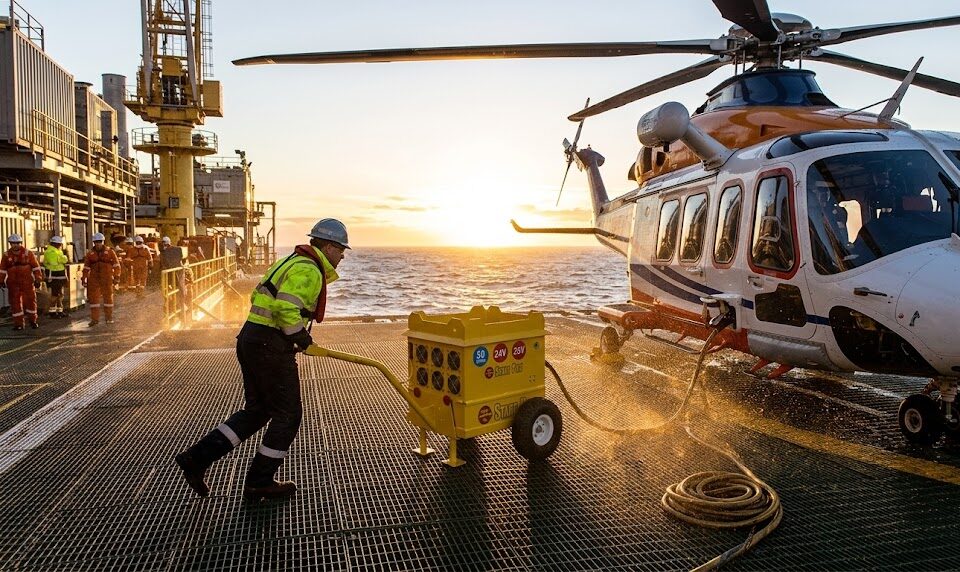
Helicopters demand reliable electrical power long before the rotors ever turn. During maintenance cycles, avionics checks, and pre-flight preparation, ground crews depend on external power sources to keep aircraft systems active without drawing down onboard batteries. For operators running Leonardo Helicopters, understanding those power requirements is not an afterthought. It is part of keeping the aircraft mission-ready. Leonardo S.p.A. produces helicopters for some of the most demanding environments in aviation: offshore platforms, emergency medical services, military operations, and law enforcement. The platforms are sophisticated, and so are their electrical systems. Getting ground support means using the right equipment, in the right configuration, every time. This guide covers: Typical power configurations used by Leonardo Helicopters How ground power units support these aircraft during ground operations Best practices for safe and effective ground power operations Overview of Leonardo Helicopters Leonardo S.p.A. is one of the most widely deployed helicopter manufacturers in the world, with platforms in service across civil, government, and defense roles in more than 150 countries. Understanding the scope of that portfolio helps ground support teams appreciate the range of configurations and power requirements they may encounter. A Global Helicopter Manufacturer Leonardo is a major aerospace and defense manufacturer headquartered in Rome, Italy. Through its helicopter division, formerly known as AgustaWestland, the company has become one of the world’s leading producers of rotary-wing aircraft. Its platforms serve civil, military, and government operators across more than 150 countries. The company name carries historical resonance. Long before modern rotorcraft existed, Leonardo da Vinci helicopter sketches from the late 15th century depicted an aerial screw, a concept widely cited as an early precursor to rotary-wing flight. Today’s Leonardo S.p.A. carries that legacy into the modern era with a portfolio spanning lightweight single-engine platforms through large twin-turbine aircraft. Popular Leonardo Helicopter Models Leonardo’s current lineup includes several widely operated models: AW109 – A light twin-turbine platform used for VIP transport, law enforcement, and EMS AW119 – A single-engine turbine helicopter used in utility and EMS roles AW139 – A medium twin frequently deployed in offshore transport and search-and-rescue AW169 – A newer medium-twin designed for EMS, law enforcement, and public service AW189 – A heavy twin used primarily in offshore oil and gas operations These helicopters operate across virtually every demanding context, such as hospital helipads, offshore platforms, border patrol, military utility missions, and VIP transport. That operational diversity means ground support requirements vary, but the need for stable, clean DC ground power is consistent across the lineup. Why Helicopters Require Ground Power External power is not a workaround. For professional helicopter operations, it is standard procedure. Maintenance and Diagnostics External ground power handles the electrical load during helicopter maintenance, allowing aircraft systems to remain active without running the engine. Avionics testing, fault code interrogation, software updates, and system functional checks all rely on this capability. Using an external ground power unit (GPU) for these tasks keeps diagnostic systems active while eliminating unnecessary engine hours. Battery Preservation A ground power unit preserves onboard battery capacity by taking over the electrical load during ground operations. Onboard aircraft batteries are expensive and sensitive to deep discharge cycles. Running avionics, communication systems, and cockpit displays from an aircraft battery during extended maintenance degrades capacity and shortens service life, which matters especially in operations with tight turnaround schedules. Safety During Ground Operations External power also supports safer ground operations. A stable, regulated power source reduces the risk of voltage spikes or fluctuations that could affect sensitive avionics. During servicing, a GPU provides consistent power delivery, something that cannot be guaranteed when drawing from a battery in an unknown state of charge. Typical Electrical Systems in Modern Helicopters Understanding the basic electrical architecture of modern helicopters helps maintenance teams and ground crews select the right GPU configuration and apply power correctly. DC Electrical Architecture The primary electrical architecture on most light-to-medium helicopter platforms, including many in the Leonardo family, is DC-based. 28V DC is the standard for most turbine-powered helicopters, a specification that traces back to military standardization and remains prevalent across the industry today. Avionics and Flight System Power Modern helicopters power a wide range of systems through their electrical buses: flight management systems, navigation equipment, communication radios, autopilot systems, and digital avionics displays. During ground operations, these systems often need to remain active for extended periods, a situation where an external power source is far preferable to battery draw. The Role of Aircraft Batteries Aircraft batteries serve two primary functions: engine starting and emergency backup power. They are not designed for extended ground use. Repeatedly discharging a helicopter battery to support maintenance checks accelerates wear and increases the likelihood of a no-start scenario when it matters most. Protecting that battery reserve is a straightforward operational priority. Ground Power Units for Leonardo Helicopters Selecting the right ground power unit starts with understanding what the equipment is designed to do and how it fits the specific aircraft and operating environment. What Is an Aircraft Ground Power Unit? An aircraft GPU is an external electrical power source used to supply power to an aircraft while it is on the ground. GPUs eliminate the need to run the aircraft’s engine or draw from onboard batteries during maintenance, pre-flight checks, or extended ground operations. They come in several configurations: portable units, wheeled mobile units, and larger autonomous systems, depending on the operational environment and power requirements. Common Voltage Types Used in Helicopter Ground Power For most helicopter platforms, including the majority operating today, 28V DC ground power is the relevant standard. Some lighter platforms operate on 24V systems, and configuration details vary by aircraft. The practical point is that the GPU must output regulated, clean DC power at the correct voltage for the specific aircraft. A unit that delivers unstable or incorrect voltage is not just ineffective; it creates risk for sensitive avionics systems. Always confirm the aircraft’s power requirements against the aircraft maintenance manual before selecting or connecting a GPU. Portable vs. Mobile Ground Power Units The operating environment usually