


A dead battery in your pickup? That’s a frustrating delay. But a dead battery in a commercial rig? That’s a full-blown crisis that brings business to a grinding halt.
If you’re a trucker, a fleet manager, or a construction operator, a silent engine costs you money. Deliveries are missed, schedules are shattered, and expensive emergency service calls are often your only option.
The solution is a specialised tool built for this exact job: a jump starter. Let’s break down the different types of starters, what the power ratings on the box really mean, and how to choose the best truck jump starter for your truck. This is about making a smart choice that keeps you on the road and earning.
What are Truck Jump Starters?

A truck jump starter is built differently from a standard car booster. The difference is largely just overwhelming electrical force. A typical passenger car might need 400 to 600 amperes (amps) of current to get going. A heavy-duty commercial truck, on the other hand, can demand a huge jolt of 1,500 to over 3,000 amps.
This massive power output is to match the physics of truck engines, especially diesels. They are built with much higher compression ratios and use far heavier internal parts, like thick steel crankshafts and massive pistons. Think of it like trying to turn a giant, heavy flywheel that’s also pushing back against you. It takes a massive initial shove to get it moving. The best truck jump starter is designed to deliver that shove.
First, let’s clear up a common myth. A jump starter doesn’t recharge your dead battery. Your alternator handles that. A jump starter is more like a bypass. It shoots a massive burst of power straight to the starter motor, completely ignoring the dead battery to force the engine to crank. Once the engine is running, your truck’s alternator takes over again.
Types of Truck Jump Starters

Jump starters are powered by different core technologies. Each type is built for a specific job and offers its own mix of power, portability, and toughness.
Heavy-Duty Lithium-Ion Jump Starters
Lithium-ion (Li-ion) power has made bulky equipment a thing of the past. The magic is in their energy density. They pack a huge amount of power into a small, lightweight box. This technology allows for a heavy-duty truck jump starter with enough muscle for a big diesel engine that can still be stored in a toolbox or behind a seat.
A huge benefit is their ability to hold a charge for a long time. You can leave one in your truck for half a year and it will still be ready to work. This makes them perfect for unexpected trouble on the road. They also recharge quickly and are built to handle hundreds of jump starts over their lifespan. Modern units have smart safety circuits that prevent sparks and protect your truck’s electronics, which is why they are so popular for emergency kits and mobile mechanics.
Sealed Lead-Acid Jump Starters
Sealed Lead-Acid (SLA) jump starters are the traditional, heavy-duty units you’ll find in most professional shops. They’ve been the standard for years because they deliver brute force, durability, and reliable performance in extreme weather.
Lead-acid batteries keep delivering power in extreme cold, where lithium-ion batteries can’t be safely charged. Both battery types lose significant capacity in freezing temperatures, though.
Lead-acid drops about 20% at freezing and 50% at -22°F. They’re built to take daily abuse in a commercial garage and handle frequent, high-current starts without issue. Their simpler, proven technology also means they cost less. For stationary use in a workshop or fleet depot where extreme cold-weather reliability matters most, an SLA jump starter is often the best tool for the job.
12V vs. 24V Truck Jump Starters
Getting the voltage right is critical. You absolutely have to match the jump starter to your vehicle’s electrical system. Using the wrong one is a fast way to fry your truck’s onboard computers, a mistake that can cost thousands to fix.
The vast majority of vehicles, including nearly all passenger cars, SUVs, and most light- and medium-duty pickup trucks, run on a 12-volt (12V) electrical system.
In contrast, many heavy-duty vehicles use 24-volt systems, common in European trucks and increasingly in newer North American models like Volvo’s VNL platform, though 12V remains standard in most Class 8 trucks in the United States. The reason for this is electrical efficiency. Pushing high power through a system at a higher voltage requires less current (fewer amps). This generates less heat and allows engineers to use thinner, lighter, and less expensive wiring throughout these massive trucks and buses.
Hooking a 24V jump starter to a 12V vehicle will send a destructive surge of power through the system, frying onboard computers and sensors. A 12V starter on a 24V system won’t have nearly enough force to do the job. For mechanics and fleet operators who work on a mix of vehicles, a dual-voltage jump starter, which can safely switch between 12V and 24V output, needs to be in your toolkit.
Multifunctional Jump Starters
Modern technology has allowed jump starters to become all-in-one roadside survival tools. A multifunctional jump starter combines the core job of starting an engine with other useful tools.
The most common features are a built-in air compressor for inflating tires, USB ports for charging phones and tablets, and a powerful LED flashlight with emergency strobe and SOS modes. By packing all these functions into one device, they offer great convenience, especially for long-haul truckers or anyone who wants a single piece of gear to handle multiple problems.
Cold-Weather Jump Starters
Trying to start a big diesel engine in the freezing cold is the ultimate power challenge. The cold itself creates a perfect storm of problems. First, it thickens the engine oil into something like molasses, making the engine incredibly difficult to turn over. Second, the chemical reaction inside a battery slows down dramatically, crippling its ability to deliver current.
Cold-weather jump starters are engineered specifically to win this fight. Their single most important feature is a high Cold Cranking Amps (CCA) rating. This is a strict, industry-standard measurement of a battery’s ability to deliver a sustained current for 30 seconds in frigid 0°F (-18°C) conditions. For anyone operating trucks in northern climates, a high CCA rating is the only number that matters. It’s a guarantee of performance when you need it most.
Key Features to Look for in a Truck Jump Starter
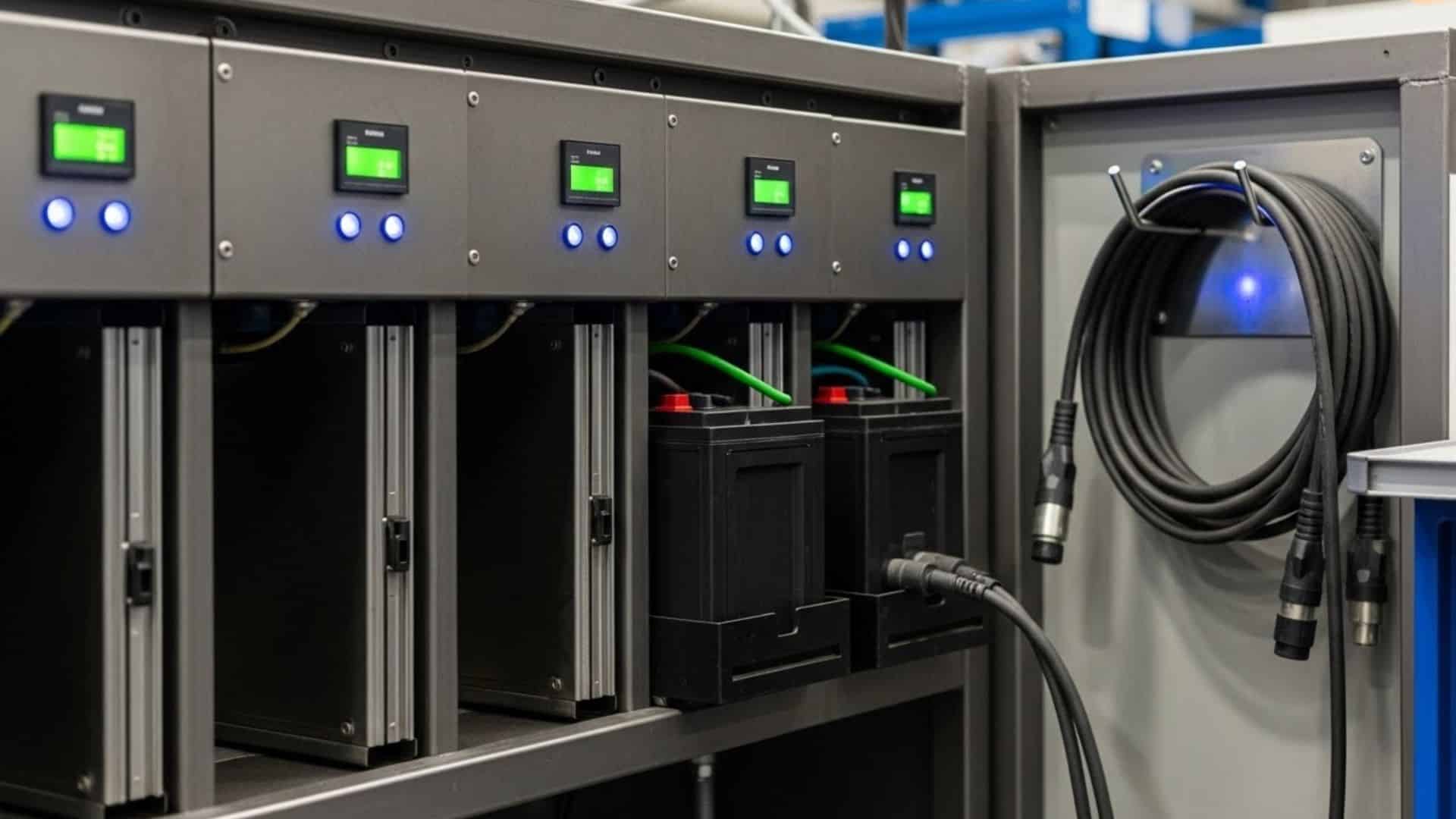
When you’re comparing models, it’s easy to get overwhelmed by technical specs. Focus on these five key areas to find the best truck jump starter for your needs.
Power Output: Forget Peak Amps and Focus on CCA
This is the most important factor. Ignore the huge “Peak Amps” (PA) number on the box. It’s a largely unregulated marketing figure that measures a meaningless split-second burst. Instead, look for the real-world numbers: Cranking Amps (CA) and, most importantly, Cold Cranking Amps (CCA). CA measures power over 30 seconds at a mild 32°F (0°C). CCA measures it at a frigid 0°F (-18°C). CCA is the gold standard for a jump starter’s true power.
Battery Type: Match It to Your Job
Your choice between lithium-ion and sealed lead-acid comes down to how you’ll use it. If you just need a starter to keep in your truck for emergencies, a lithium-ion model makes the most sense. They are small, light, and can hold a charge for months, so you know it will be ready when you need it. For a heavy-use tool in a workshop, the raw power, durability, and cold-weather strength of a lead-acid unit is a better fit.
Portability and Build Quality
Think about the physical design. If you’re a mobile mechanic, size and weight are critical. Look for compact designs with sturdy cases and, just as importantly, heavy-gauge cables and strong, well-made clamps that can open wide and bite down hard.
Essential Safety Features
A good jump starter is a safe one. Don’t even consider a model without modern safety protections. These include spark-proof technology, reverse-polarity protection (which saves you from disaster if you mix up the positive and negative clamps), and over-current protection. These systems protect you, your equipment, and your vehicle’s expensive electronics.
Extra Functionalities
Think about what you truly need. An integrated air compressor is a lifesaver if you need to inflate a tire, but it’s just extra weight and another potential point of failure if you already have one. The main goal is to start the engine; other features come second.
Choosing the Right Jump Starter for Your Truck

Picking the right jump starter isn’t about grabbing the biggest or most expensive one off the shelf. You want to find the specific tool that fits your needs.
First, match the power to your biggest engine. Diesels need far more power than gas engines. A good rule of thumb is to look for a unit that delivers at least 2 cold cranking amps for every cubic inch of engine displacement. That’s roughly 120 CCA per litre for diesels.
Always buy more power than you think you need. An overpowered starter won’t hurt a smaller engine, but an underpowered one is a useless brick in an emergency.
Next, think about your daily work. For personal use in a pickup for the occasional emergency, a compact portable jump starter for trucks is the ideal choice. A lithium-ion model is perfect for this role. For a professional who might use the starter multiple times a week, durability is key.
Finding the best semi truck jump starter often means investing in a high-end, dual-voltage unit that can handle any vehicle you encounter. A powerful and reliable semi truck jump starter is a non-negotiable tool for any serious operator.
Your climate is another critical factor. If you work in a warm region, you can focus more on portability and features. But if you face cold winters, the CCA rating becomes the most important spec on the box. The ability of a diesel truck battery booster to perform in sub-zero weather is essential. When you’re looking for the best heavy-duty jump starter for semi truck operations in a cold climate, start and end your search with the CCA number.
Finally, look at the practical details. Make sure it has the right voltage for your fleet. Insist on those modern safety features. These protections are there to protect your truck’s wiring and prevent a costly mistake.
An Investment in Uptime

A dead battery on a commercial vehicle is a costly problem, but it has a simple solution. It’s simple: ignore the flashy marketing on the box and pay attention to the numbers that actually measure starting power. That’s how you get a tool that provides genuine security and peace of mind.
It all comes down to a few basic ideas. You have to respect the power that big engines demand. You need to focus on the ratings that actually matter, like CCA. And you must match the battery technology and the voltage to the work you do every day.
Buying a high-quality best truck jump starter is not an expense. It’s a smart investment in your own uptime, a guard against lost productivity, and an insurance policy against the high price of being stranded. With the right tool for the job, you’re not waiting for a tow truck; you’re getting back to work.