
How Do Trains Work? A Simple Guide to Modern Rail Systems
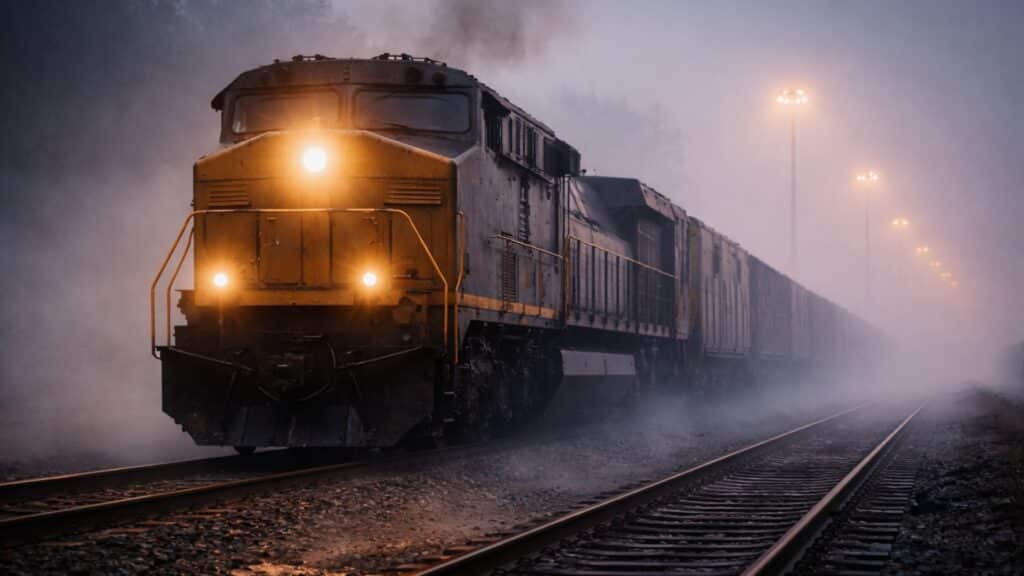
Trains move more cargo with less energy than almost any other form of land transportation. Steel wheels rolling on steel rails create far less resistance than rubber tires on asphalt. That core advantage explains why one locomotive can haul thousands of tons across entire continents. So, how do trains work? At the most basic level, they convert energy into motion along a guided, low-friction track. But modern rail propulsion goes far beyond simple mechanics. Today’s rail networks blend power electronics with algorithmic traction control in ways engineers from a few decades ago wouldn’t recognize. Power Sources Used in Modern Rail Operations Every rail system starts with a basic question: where does the power come from? Diesel, electric, and hybrid configurations each serve different needs. Diesel fuel dominates North American and Australian freight operations. It packs roughly 35.8 MJ/L of energy, letting locomotives run over 1,000 miles without refueling. That range matters in remote territory where stringing electrical wires would cost a fortune. But diesel engines achieve only 30–35% thermal efficiency, and the rest escapes as waste heat before even reaching the wheels. By comparison, grid electricity delivered via overhead catenary systems offers higher drivetrain efficiency. High-voltage AC power (typically 25 kV or 15 kV) minimizes transmission losses. The wire-to-wheel efficiency of an electric train’s drivetrain can reach around 95%. True well-to-wheel efficiency, which includes losses at power plants and in transmission lines, ranges from 25–50% depending on how the electricity is generated. Still, that beats diesel’s thermal efficiency, which is why electrification appeals to high-density corridors. Then, there are hybrids. In January 2025, Canadian National launched a pilot program pairing a diesel prime mover with a 2.4 MWh battery system. The batteries handle the high-torque demands of starting heavy trains while the diesel engine runs at steady, efficient baselines. The system also captures braking energy that would otherwise dissipate as heat. CN reports this setup targets a 50% reduction in fuel consumption for yard operations. Locomotive Propulsion and Power Conversion Here’s a common misconception: diesel engines turn train wheels directly. They don’t. Connecting a diesel engine mechanically to wheels hauling 15,000 tons would require impossibly large transmissions. Instead, modern locomotives use electrical transmission. How does a train engine work under this setup? Through a chain of energy conversions. First comes the prime mover, a massive diesel engine with 12 to 16 cylinders. The crankshaft spins a main alternator, generating alternating current. That AC hits a rectifier bank, converting it to stable direct current, typically on the order of several hundred to over a thousand volts, depending on locomotive design. Inverters then switch the DC on and off thousands of times per second to synthesize new AC waveforms, using variable voltage variable frequency control to govern traction motor speed and torque with extreme precision. That covers how a single locomotive generates tractive effort. But what happens when one isn’t enough? This is where the distinction between locomotive vs train becomes operationally important. A locomotive contains propulsion machinery but carries no payload. A train refers to the entire coupled consist, including unpowered rolling stock that can stretch over two miles. Pulling all that mass from the front alone puts enormous tension on couplers. The solution is distributed power: locomotives placed at the head, middle, and rear-of-consist. These remote units communicate via encrypted radio telemetry, synchronizing throttle commands instantly to reduce coupler stress. Wheel-Rail Interaction and Traction Efficiency All that precisely controlled power means nothing if wheels can’t grip the rails. Low friction is rail transport’s core advantage and its greatest engineering challenge. How do trains pull massive loads without wheels spinning on smooth rails? It comes down to adhesion and creep. Wheel-rail interaction isn’t simple static friction. Optimal traction actually occurs when wheels spin slightly faster than the train moves, typically a micro-slip of 1–2% under dry, clean rail conditions. In this state, steel surfaces interlock at a microscopic level, and friction peaks. Modern control systems monitor every wheel by the millisecond. When a wheel starts slipping beyond optimal thresholds, inverters instantly cut power to that specific axle. Each axle gets its own control loop. Physical conditions impose hard limits. Wet rails, ice, or leaf mulch (which creates a slippery pectin layer) cut adhesion fast. In response, locomotives fight back with sanding systems. Silica sand blasts in front of the wheels, crushes under pressure, and temporarily restores grip. Bad weather still wins sometimes. Guidance, Stability, and Track Geometry How do trains work without steering wheels? They steer themselves through geometry. Train wheels aren’t perfect cylinders. They taper conically, smaller on the outside and larger near the inside flange. When centrifugal force pushes a wheelset toward the outer rail in a curve, the outside wheel rides on its larger diameter while the inside wheel rides on its smaller diameter. Both wheels share a solid axle rotating at identical angular velocity, so the outer wheel covers a greater distance per revolution. The axle steers itself into the curve. Push the speed high enough, and this self-centering breaks down into side-to-side oscillation that engineers call hunting motion. Suspension keeps the train’s weight from pounding the track apart. Primary suspension sits between axle bearings and bogie frames, absorbing high-frequency vibrations. Secondary suspension goes between bogie frames and car bodies, handling slower swaying motions and keeping ride height level regardless of passenger load. Equally important, track geometry must be precise. Standard gauge keeps 1,435 mm between rails, maintained within millimeters. On curves, the outer rail sits higher than the inner rail. This superelevation banks the track like a racetrack, fighting centrifugal force and spreading load so both rails wear evenly. Train Control, Signaling, and Safety Systems Trains can’t steer around obstacles, and a fully loaded freight train can take over a mile to stop. Safety depends on external control systems that have evolved significantly. Traditional block signaling divided tracks into sections, permitting only one train per block. Centralized Traffic Control (CTC) improved on this by consolidating signals and switching authority into dispatch centers, letting operators view