

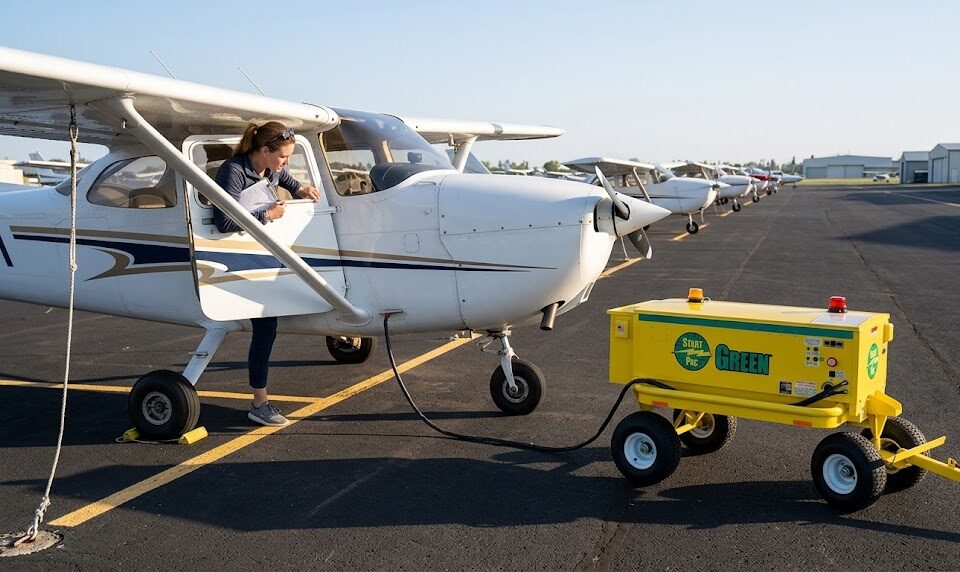
Battery maintenance is one of the most overlooked aspects of owning a Cessna aircraft, not because it’s unimportant, but because failure is rarely immediate. Batteries degrade quietly, losing capacity long before they fail to start an engine.
When failure does happen, it tends to occur at the least convenient moment: after a short turnaround, at a remote strip, or during a high-demand start. In most cases, the warning signs were present (reduced capacity, voltage sag under load), but went unnoticed because standard checks didn’t reveal the underlying decline.
For private pilots, flight schools, FBOs, and maintenance technicians, understanding how aircraft batteries degrade and how operational practices influence that process is key to avoiding unnecessary Cessna battery replacement, delays, and potential safety issues. This guide focuses on how battery systems function across Cessna aircraft, what shortens their lifespan, and how proper ground support practices can significantly improve reliability.
Cessna Aircraft Models: Understanding Your Battery Needs
Battery requirements across Cessna aircraft models vary significantly, and treating them as interchangeable leads to avoidable maintenance issues.
A Cessna 172 operates with relatively modest electrical demands: a single piston engine, limited avionics load, and lower starter current requirements. In contrast, aircraft like the 182 or 206 introduce higher compression engines, increased electrical loads, and greater dependence on stable voltage during start.
The difference becomes more pronounced in turbine aircraft such as the Citation series. These aircraft rely on higher voltage systems (typically 24V or 28V), greater capacity batteries, and stricter voltage stability requirements for avionics, environmental systems, and engine start sequences.
Battery selection and maintenance must reflect:
- System voltage (12V vs 24V/28V)
- Required cranking amps (CCA)
- Avionics load profile
- Frequency of operation
Understanding your aircraft’s electrical demands is not just about compatibility; it directly affects battery lifespan, charging behavior, and failure risk.
Where Are Cessna Aircraft Built?
A common question is “where are Cessna aircraft built,” and the answer has practical implications for maintenance.
Cessna aircraft have been manufactured in Wichita, Kansas since 1927, and today production continues under Textron Aviation. This long-standing manufacturing base has resulted in a highly standardized support ecosystem.
For aviation battery care, that standardization matters. Cessna provides:
- Clearly defined approved battery types
- Documented installation procedures
- Established load testing and replacement criteria
- Consistent electrical system specifications across models
This level of documentation reduces ambiguity. Maintenance decisions, such as when a battery should be replaced or which type is approved, are based on established data rather than interpretation. Compared to less standardized platforms, this improves reliability and reduces maintenance variability across fleets.
Understanding the Cessna Electrical System
The battery in a Cessna aircraft serves three primary functions:
- Engine starting (high current demand)
- Powering avionics before the alternator output stabilizes
- Providing emergency backup power in the event of alternator failure
While engine start is the most visible function, backup capacity is the most critical from a safety perspective.
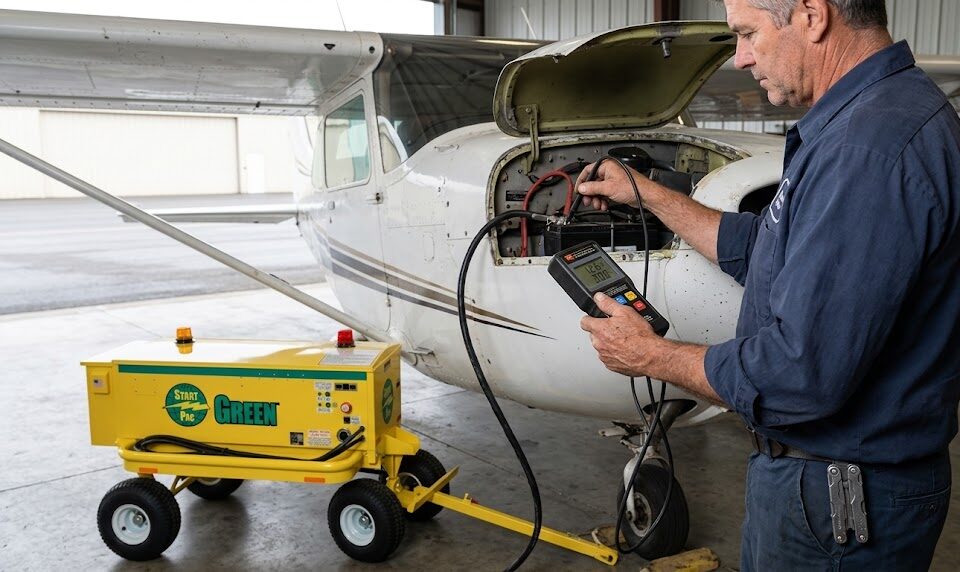
A key issue in battery diagnostics is that voltage at rest does not reflect true battery health. A degraded battery may show normal voltage but fail under load due to increased internal resistance.
What actually determines battery health:
- Capacity under load (not static voltage)
- Ability to maintain voltage during high current draw
- Recovery behavior after discharge
Battery Types in Cessna Aircraft
- Flooded (vented) lead-acid: Requires electrolyte monitoring; sensitive to improper maintenance.
- Sealed aircraft battery / AGM: Lower maintenance, better vibration resistance, but sensitive to overcharging.
- Lithium (STC-approved only): Higher energy density and faster recharge, but requires strict compliance with installation and charging requirements.
Failure Mechanisms (Often Overlooked)
- Sulfation: Occurs when batteries remain partially discharged; reduces capacity permanently.
- Plate degradation: Caused by repeated overcharging or deep cycling.
- Internal resistance increase: Leads to voltage collapse during engine start.
Without load-based testing, these issues remain undetected until performance failure occurs.

Cessna Aircraft Maintenance: Battery-Specific Best Practices
Effective Cessna aircraft maintenance requires aligning battery care with actual usage patterns, not just inspection schedules.
Aircraft Battery Inspection & Testing
- Perform capacity/load testing at least every 6 months for high-cycle aircraft
- Inspect terminals and connections at every 50-hour interval
- Replace batteries based on performance metrics, not just age
Charging Practices
Using the wrong aircraft battery charger is one of the most common causes of premature failure.
Aircraft batteries require:
- Controlled voltage limits
- Proper float termination
- Charging profiles matched to battery chemistry
Automotive chargers often exceed acceptable voltage thresholds, leading to:
- Plate damage
- Electrolyte loss (in flooded batteries)
- Reduced lifespan in AGM batteries
Maintenance by Battery Type
- Flooded batteries: Check electrolyte levels; use distilled water only.
- Sealed batteries: Inspect for swelling, heat damage, or terminal corrosion.
Storage Considerations
Aircraft that sit unused are at higher risk of battery degradation:
- Batteries left below 80% charge begin to sulfate.
- Extended discharge leads to irreversible capacity loss.
- Use a maintenance charger if idle for more than two weeks.
Consistency, not complexity, is what preserves battery life.

How Ground Power Units Support Battery Health
In high-cycle helicopter operations, reducing reliance on the onboard battery is one of the most effective ways to extend its lifespan.
Each engine start introduces a high current load that contributes to gradual battery wear. While acceptable in low-frequency use, repeated cycles in flight schools or FBO operations accelerate degradation.
A properly specified ground power unit (GPU):
- Supplies stable external power for engine start
- Maintains battery charge by reducing discharge cycles
- Provides regulated voltage for avionics during ground operations
Why Voltage Stability Matters
Unregulated or poorly matched power sources can introduce:
- Voltage spikes
- Undervoltage conditions
- Electrical noise affecting avionics
Aviation ground support equipment maintains voltage within defined tolerances (e.g., 14V or 28V systems), protecting sensitive onboard systems during maintenance and startup.
Using external power strategically, especially in high-cycle environments, directly reduces battery stress and improves system reliability.
Common Battery Maintenance Mistakes to Avoid
Most battery failures are not sudden; they result from repeated, avoidable mistakes.
Deep Discharge Without Recovery
Allowing a battery to remain discharged leads to sulfation. Even if the aircraft starts afterward, capacity loss has already occurred.
Using Incorrect Chargers
Automotive chargers often lack proper regulation and float control, leading to slow, cumulative damage.
Relying on Voltage Alone
A battery can show normal voltage and still fail under load. Without capacity testing, degradation goes undetected.
Ignoring Storage Conditions
Batteries left partially charged during inactivity rarely recover full capacity.
Skipping Preflight Electrical Awareness
Slow cranking, dim avionics during startup, or delayed system response are early warning signs, not minor inconveniences.

START PAC® Solutions for Cessna Operators
Ground support equipment plays a direct role in battery longevity and overall electrical system health.
START PAC units are designed to provide:
- Regulated voltage output matched to aircraft systems (12V and 28V)
- High-current starting capability without stressing onboard batteries
- Stable power for avionics testing and maintenance operations
For high-cycle operators such as flight schools and FBOs, portable starting units reduce battery cycling by handling engine starts externally. This decreases wear and extends service intervals.
For helicopter maintenance environments, regulated power supplies ensure consistent voltage during diagnostics and avionics work, reducing the risk of damage caused by unstable external sources.
The gpu aircraft product range supports both piston and turbine Cessna aircraft, allowing operators to match equipment specifications to their fleet requirements.
Final Thoughts
Cessna battery reliability comes down to consistent maintenance and proper operational support rather than reactive replacement. When operators apply correct charging practices, perform load-based testing, and prevent prolonged discharge, battery lifespan improves significantly and electrical system performance remains stable.
For operators looking to reduce unnecessary battery wear and support safer ground operations, integrating properly regulated ground power into routine workflows helps maintain consistent voltage and reduces stress on onboard systems. START PAC equipment is designed for general aviation use, supporting Cessna operators in maintaining dependable electrical performance across both maintenance and flight operations.