

Aviation is one of the safest modes of transportation in the world, but the systems, checklists, and technology behind that safety record only work as well as the people operating them. This is where human factors in aviation comes in. It is the field dedicated to understanding how human capabilities, limitations, and behavior interact with aircraft, procedures, and the broader operating environment.
For Maintenance, Repair, and Overhaul (MRO) technicians, flight crews, ground support teams, and aviation safety managers, understanding human factors in aviation is not just theoretical. It directly shapes training programs, maintenance procedures, and the design of the equipment used every day on the ramp and in the cockpit.
Defining Human Factors in Aviation
The Federal Aviation Administration (FAA) defines human factors as a multidisciplinary effort to compile information about human capabilities and limitations, then apply that information to equipment, systems, procedures, training, and personnel management for safe and effective performance. In practical terms, human factors in aviation are the study of how people think, perceive, communicate, and make decisions within the demanding environment of flight operations and aircraft maintenance.
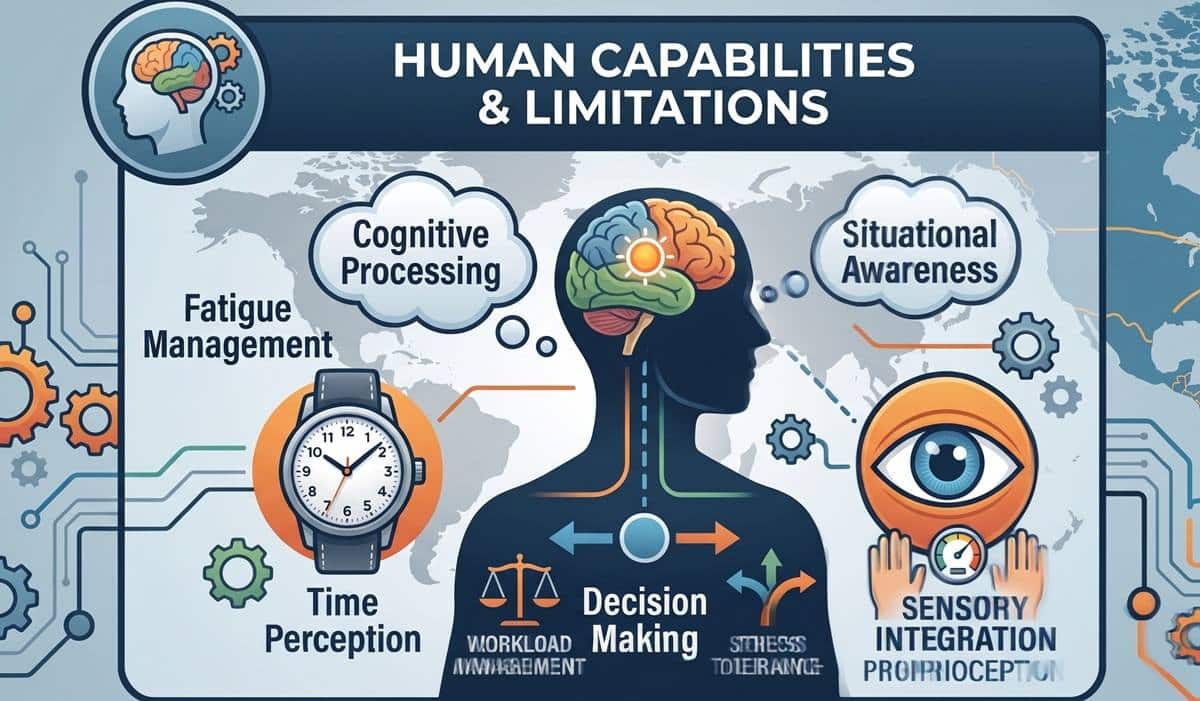
This field draws from psychology, engineering, physiology, and organizational science. Rather than treating human error as a standalone failure, human factors specialists look at the full system: the person, the equipment they use, the procedures they follow, and the environment they work in.
Why the Concept Matters So Much in Aviation
Human error has been identified as a contributing factor in a large majority of aviation accidents and incidents. The Federal Aviation Administration estimates that approximately 80 percent of aviation accidents are related to human factors, a figure that explains why regulators, airlines, and manufacturers invest heavily in human factors research. The goal is not to eliminate human involvement, since people remain essential to safe operations, but to design systems and procedures that reduce the likelihood and consequences of mistakes.
The SHELL Model: A Framework for Understanding Human Factors
One of the most widely used frameworks for human factors in aviation is the SHELL model, developed to illustrate how different elements of an operational system interact with the human at the center.
The Four Components of SHELL
- Software: The rules, procedures, checklists, and documentation that guide how tasks are performed.
- Hardware: The physical equipment, including aircraft systems, controls, displays, and ground support tools.
- Environment: The physical, organizational, and social conditions surrounding the task, from weather to workplace culture.
- Liveware: The people involved, including pilots, mechanics, air traffic controllers, and ground crew.
The model places Liveware at the center because every other component interacts with the human operator. A poorly designed checklist (software), an awkwardly placed switch (hardware), or a noisy, high-pressure environment can all increase the chance of error, even when the individual is skilled and well-trained.
The Dirty Dozen: Common Contributors to Human Error
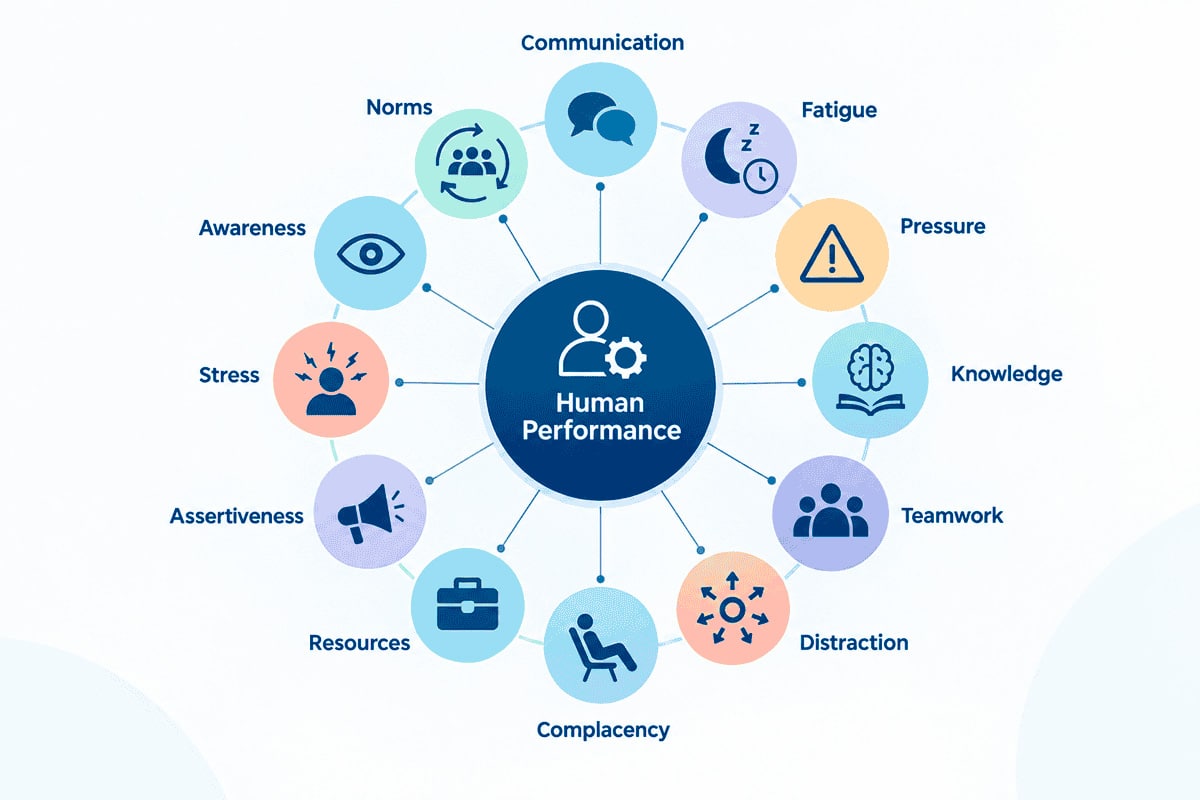
Within aviation maintenance specifically, a well-known set of human factors is often referred to as the Dirty Dozen. Originally developed after a series of maintenance-related accidents, this list highlights the most common conditions that lead to mistakes.
The Twelve Common Factors
The list typically includes:
- Lack of communication
- Complacency
- Lack of knowledge
- Distraction
- Lack of teamwork
- Fatigue
- Lack of resources
- Pressure
- Lack of assertiveness
- Stress
- Lack of awareness
- Norms
These factors are not abstract concepts. A technician skipping a step because a task feels routine, or a crew member hesitating to speak up during a rushed turnaround, are everyday examples of human factors in aviation playing out on the hangar floor or the flight line.
How Human Factors in Aviation Shape Everyday Operations
Understanding human factors in aviation is not limited to accident investigation. It actively shapes how airlines, MROs, and ground operations teams design their daily workflows.
Crew Resource Management
Crew Resource Management (CRM) applies human factors principles directly to flight deck operations. It focuses on communication, teamwork, decision-making, and situational awareness among crew members, encouraging assertiveness and mutual respect regardless of rank or seniority. CRM training has become a standard requirement across commercial aviation precisely because it addresses the human side of safety, not just technical competence.
Fatigue and Workload Management
Fatigue is one of the most studied human factors in aviation because it directly impairs cognitive function, reaction time, and judgment. Regulatory duty-time limits, rest requirements, and scheduling practices all stem from human factors research aimed at keeping personnel alert and capable of sound decision-making. Workload management follows a similar logic: overloading a technician or pilot with too many simultaneous tasks increases the risk of missed steps, while underload can lead to complacency.
Maintenance Procedures and Ground Support
Aircraft maintenance is a field where human factors research has had a particularly strong impact. Clear documentation, standardized torque and inspection procedures, and well-organized tooling all reduce the chance of error during routine and complex maintenance tasks. Reliable ground support equipment and dependable power sources during maintenance and troubleshooting also reduce the pressure and distraction that contribute to mistakes, reinforcing how equipment design ties directly into human performance.
Human Factors and Aviation Safety Outcomes
The connection between human factors in aviation and safety outcomes is well documented. Investigations into aviation accidents routinely trace root causes back to communication breakdowns, fatigue, or procedural shortcuts rather than purely mechanical failure. A closer look at what causes plane crashes makes clear how often human performance, not equipment alone, determines the outcome of an in-flight emergency or ground incident.
This is precisely why organizations like the FAA, the International Civil Aviation Organization (ICAO), the International Air Transport Association (IATA), and the European Union Aviation Safety Agency (EASA) continue to fund human factors research and require ongoing training. Reducing human error is treated as a continuous process, not a problem that can be solved once and forgotten.
Automation and the Changing Role of Human Factors
Modern aircraft rely heavily on automated systems, from flight management computers to automated maintenance diagnostics. While automation has improved consistency and reduced certain categories of error, it has also introduced new human factors challenges. Over-reliance on automation, loss of manual proficiency, and “automation surprises,” where a system behaves in a way the operator doesn’t expect, are all active areas of human factors research today.
This shift means human factors in aviation are not a static field. As aircraft systems, ground support technology, and maintenance tools evolve, the discipline continues to adapt, studying how new technology changes the way people interact with the systems they depend on.
Training and Continuous Improvement
Because human factors are dynamic rather than fixed traits, training is central to managing them effectively. Initial and recurrent human factors training is a regulatory requirement across much of the maintenance and flight operations world, covering topics like communication, fatigue awareness, and error management.
Beyond formal requirements, a strong safety culture reinforces these lessons daily. Organizations that encourage open reporting of mistakes and near-misses, rather than assigning blame, tend to see fewer repeat errors over time. This cultural dimension is increasingly recognized as one of the most important human factors in aviation, since procedures and training only work when people feel safe using them honestly.
Aircraft downtime often creates the exact conditions, time pressure and workload, that human factors research warns against. Understanding what happens during aircraft on ground situations helps illustrate why calm, well-supported ground operations matter as much as in-flight procedures when it comes to reducing error.
Final Thoughts
Human factors in aviation are ultimately about designing systems that work with human strengths and limitations rather than against them. From the SHELL model to the Dirty Dozen, the frameworks used across the industry all point to the same conclusion: safety depends on more than technical skill or reliable equipment. It depends on communication, awareness, manageable workloads, and a culture that supports honest reporting.
For technicians, flight crews, and ground operations teams, staying current on human factors in aviation is not a box-checking exercise. It is a continuous effort that shapes how safely and efficiently aviation operates every single day.