

Most people never think about what happens on the tarmac between flights. But ground support equipment (the tugs, ground power units (GPUs), and starting units that keep aircraft turning around) and the crews who run it have influenced far more than aviation itself. From the sunglasses on your face to the AI models that flag equipment failures before they happen, aviation’s ground operations have quietly shaped fashion, motorsport, business strategy, and workplace policy. Here are 10 places where that influence still shows up.
1. Aviator Sunglasses: Born on the Flight Line, Built for Fashion
Aviator sunglasses date back to the 1930s, when the U.S. Army Air Corps worked with optical company Bausch & Lomb to solve a real operational problem: pilots suffering glare and eye strain at high altitude. The result used convex teardrop lenses made from tinted glass that cut glare, paired with a thin metal frame that replaced the bulkier flight goggles pilots wore before. Built to solve a problem on the flight line first, it only later became one of the most copied eyewear shapes in history, sold to the public under the Ray-Ban name.
2. The Bomber Jacket: Military Aviation Gear Turned Style Icon
In 1931, the U.S. Army Air Corps issued an order updating the earlier A-1 flight jacket, replacing its button front with a zipper and its knit collar with a leather drop-fall collar. The result, the Type A-2, became associated with American pilots on every front of World War II and is still issued by the U.S. Air Force today, according to the Smithsonian National Air and Space Museum.
Crews personalized their jackets with squadron insignia and painted artwork, often matching the nose art on their aircraft, turning standard-issue flight gear into personal identity. Its nylon successor, the MA-1, followed in the 1950s and became the jacket most people now picture when they hear “bomber jacket,” moving from military flight lines into music subcultures, streetwear, and designer collections. Gear built for function on the flight line outlived its original mission by decades.
3. Pit Crew Culture: How Motorsport and Aircraft Turnaround Share a Clock
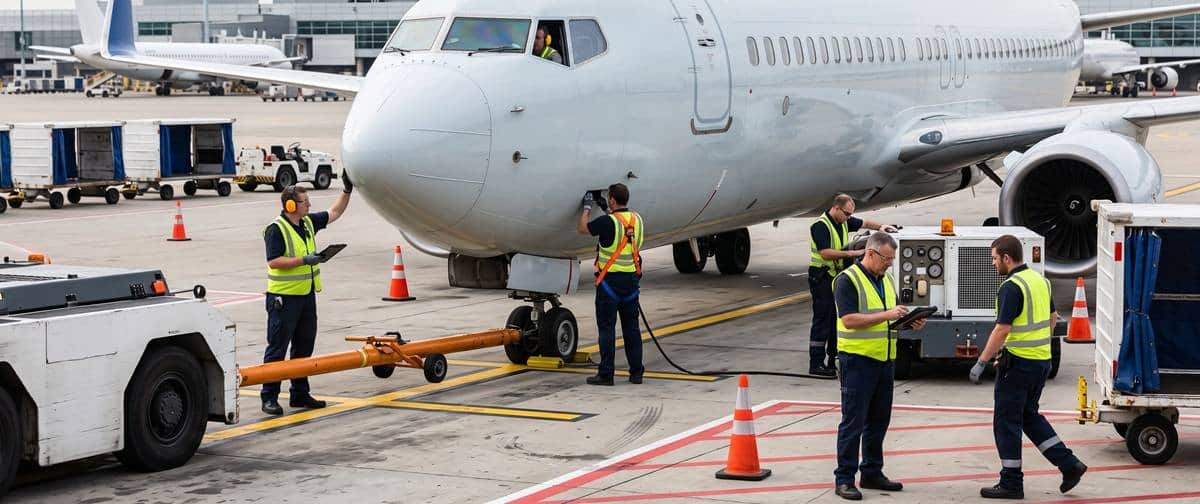
NASCAR pit crews and aviation ground crews solve the same problem: get a machine back into service fast, without cutting a corner that gets someone hurt. Military aviation maintenance teams have explicitly adopted the comparison. An Apache helicopter crew chief noted his unit is referred to as a “pit crew” by leadership because of how the team works, with each mechanic knowing exactly what has to be done to turn the aircraft around. The vocabulary crossed over because the discipline is identical: pre-staged tools, defined roles, and a countdown clock.
Shared DNA: Ground Crews vs. Pit Crews Under Time Pressure
Both trades run on the same three constraints: a fixed checklist, a small window, and zero tolerance for a missed step. Whether it’s a 105-amp aircraft starting unit or a fuel can, the crew that wins is the one that rehearsed the sequence before the clock started.
4. Lithium vs. Lead-Acid: The Battery Shift That Changed Ground Power
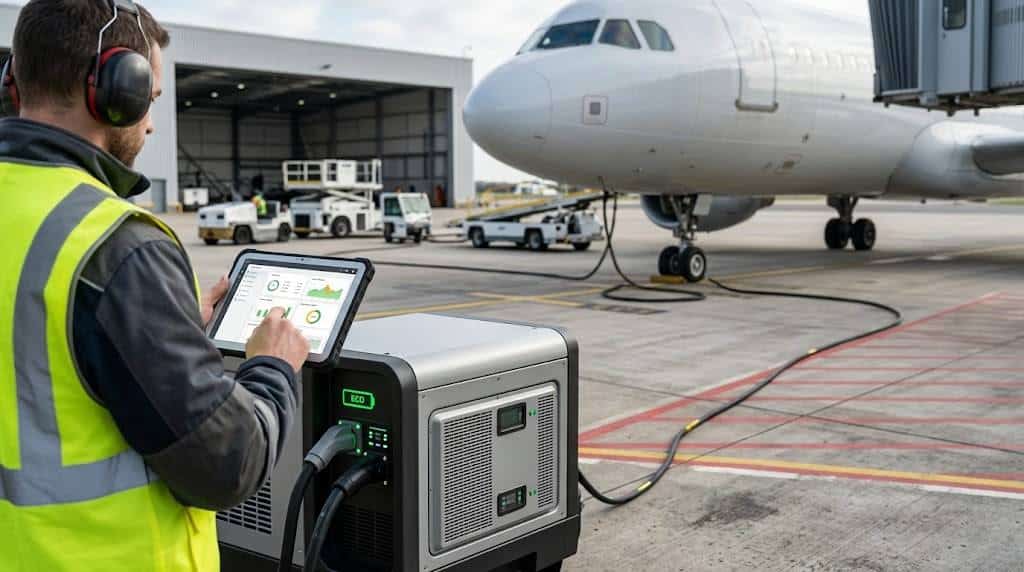
For decades, lead-acid was the default chemistry for aircraft starting units and GPUs: reliable, but heavy, slow to recharge, and prone to capacity loss in cold weather. The shift to lithium-ion changed the math for maintenance, repair, and overhaul (MRO) teams and fixed-base operators (FBOs), with faster recharge cycles, a fraction of the weight, and better output in the cold temperatures that used to derate lead-acid packs. It’s the same shift consumer electronics and EVs went through earlier, now applied to the flight line out of necessity, since a technician pushing a unit across a ramp all day feels every pound.
5. Predictive Maintenance: How AI Learned From Aircraft Ground Support
Aviation didn’t invent machine learning, but it gave predictive maintenance one of its highest-stakes proving grounds. Modern predictive maintenance combines IoT sensors, machine learning, and cloud analytics to continuously monitor aircraft health and flag problems before they cause failures, with engines alone streaming thousands of parameters per flight cycle.
Ground crews turn those alerts into action, scheduling repairs during planned turnarounds instead of scrambling after a breakdown, and many carriers now use the same data to forecast shop visits and parts demand well in advance. The same pattern (sensor data, failure-mode libraries, and predictive alerts) has since spread to manufacturing lines, rail fleets, and heavy equipment, all drawing on lessons aviation learned out of necessity.
6. The Real Cost of Aircraft Downtime: Lessons for Any Fleet Operator
Nothing sharpens a maintenance strategy like a dollar figure. According to Flying Magazine, Boeing estimates one hour of aircraft-on-ground (AOG) time costs an airline $10,000 to $20,000, and in some circumstances as much as $100,000 an hour. The lesson generalizes past aviation: any fleet operator, whether in rail, mining, or construction, often pays a multiple of the repair cost in downstream disruption.
That’s why reliable battery minders that keep starting batteries at full charge between duty cycles aren’t a convenience item. They’re a line item against a five- or six-figure-per-hour risk.
7. Pilot Fatigue and Rest Rules: Aviation’s Influence on Modern Work-Hour Laws
Following the 2009 crash of Colgan Air Flight 3407, the FAA overhauled pilot flight, duty, and rest rules based on updated fatigue science. The final rule set flight-time limits of 8 to 9 hours, a 10-hour minimum rest period with an opportunity for 8 hours of uninterrupted sleep, and at least 30 consecutive hours off duty each week, as detailed by the FAA itself. That framework, data-driven duty limits instead of flat shift caps, became a reference point other high-consequence, round-the-clock industries have pointed to when building their own fatigue-risk approaches. Aviation didn’t just regulate its pilots. It helped popularize fatigue science as a basis for labor policy generally.
8. From Runway to Runway: Aviation’s Fashion Feedback Loop
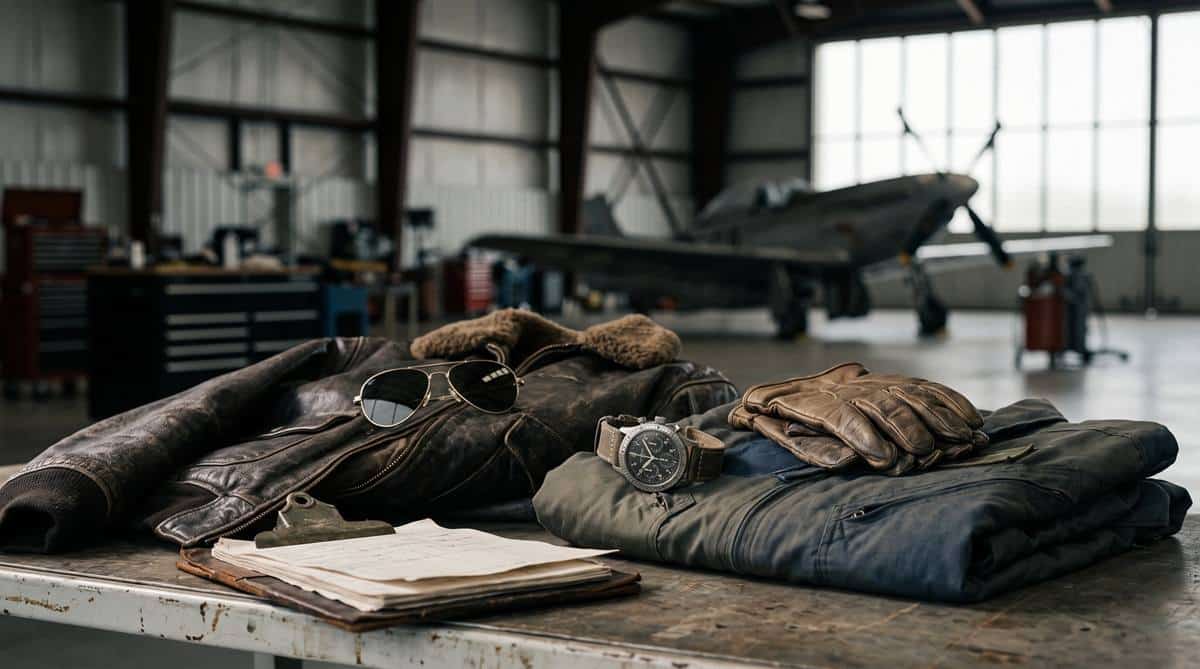
The aviator and the bomber jacket aren’t isolated cases. They’re the clearest examples of a repeating pattern: military aviation gear gets adopted by working ground crews and pilots for function, gets photographed on someone famous, and gets absorbed into mainstream fashion within a generation. Flight suits, chronograph watches designed for cockpit instrument reading, and even cargo pants trace the same arc. The common thread is that ramp and cockpit gear is built for zero failure tolerance first, and that kind of over-engineering photographs well decades later as “timeless design.”
9. GPUs and the Rise of Emission-Free Ground Operations
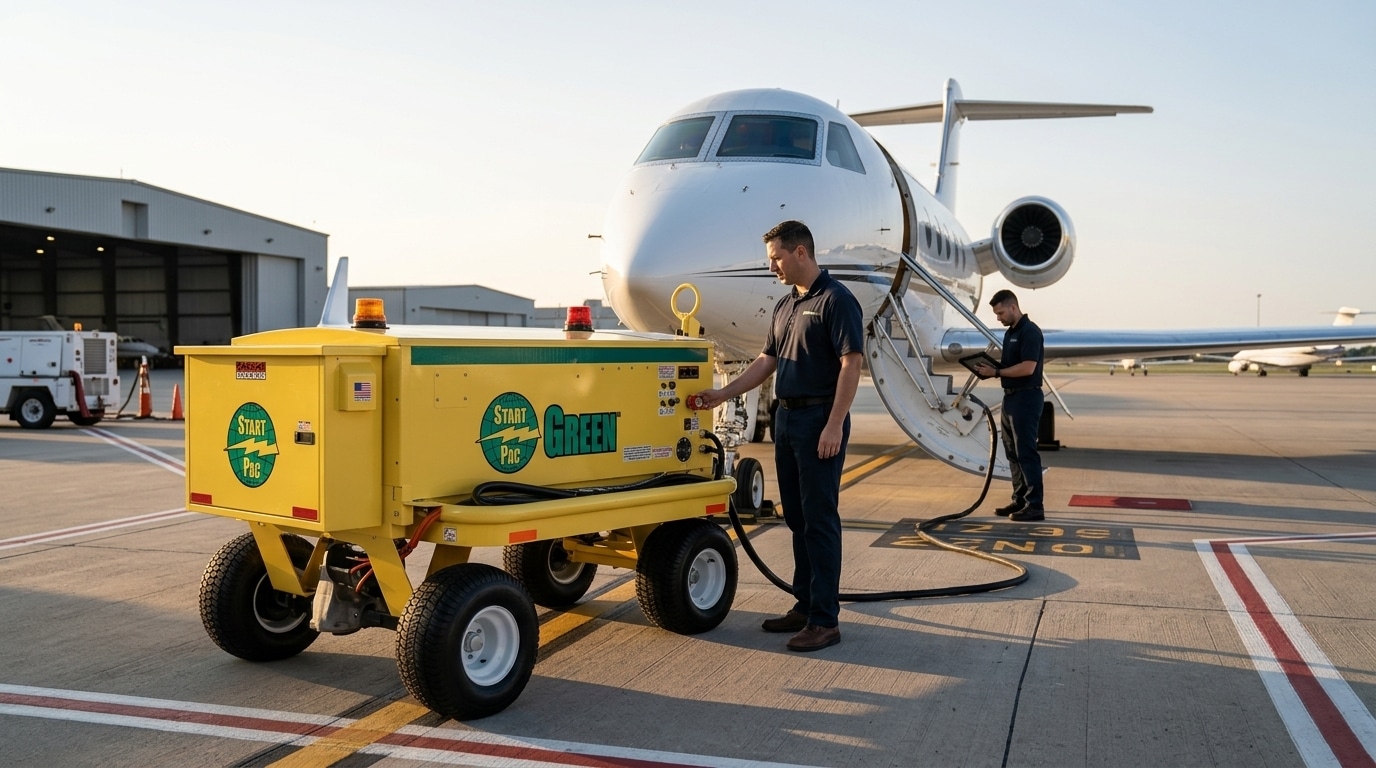
Diesel-powered GPUs have run ramps for generations, but airports and FBOs are under growing pressure to cut ground-level emissions near terminals and hangars, both for air quality and for sustainability commitments from airline customers. That’s driven demand for fully electric ground power, which is where units like the Start Pac Green come in: an emission-free GPU built to deliver full aircraft starting and ground power without idling diesel next to the ramp. It’s the same electrification pressure reshaping trucking and rail yards, arriving on the flight line first because aviation ramps are among the most emissions-scrutinized ground environments in transportation.
10. What Ground Support Equipment Teaches Us About Reliability
Nearly every item on this list (the sunglasses, the jacket, the pit crew choreography, the battery chemistry, the AI models, the fatigue rules) shares one non-negotiable requirement: the aircraft and the people around it have to be ready when needed, with no room for “probably.” That standard shows up in simple flight line habits that any operation can borrow, such as walking the ramp for debris, tracking every tool, following checklists even on routine jobs, and servicing equipment on a schedule rather than waiting for it to break. It’s also why ground support equipment built for aviation maintenance holds up well when it’s moved into locomotive yards, mining sites, or military motor pools. It wasn’t designed to be good enough. It was designed not to fail.
Why the Ground Crew Still Matters
The flight line rarely gets the credit. Pilots and aircraft get the spotlight; ground crews get the checklist. But the equipment, the discipline, and the standards built into aviation ground support have quietly shaped how other industries think about readiness, reliability, and risk. For MRO teams, fleet managers, and procurement officers choosing ground support equipment today, that legacy is the actual product: gear engineered to a standard where downtime was never an option.