

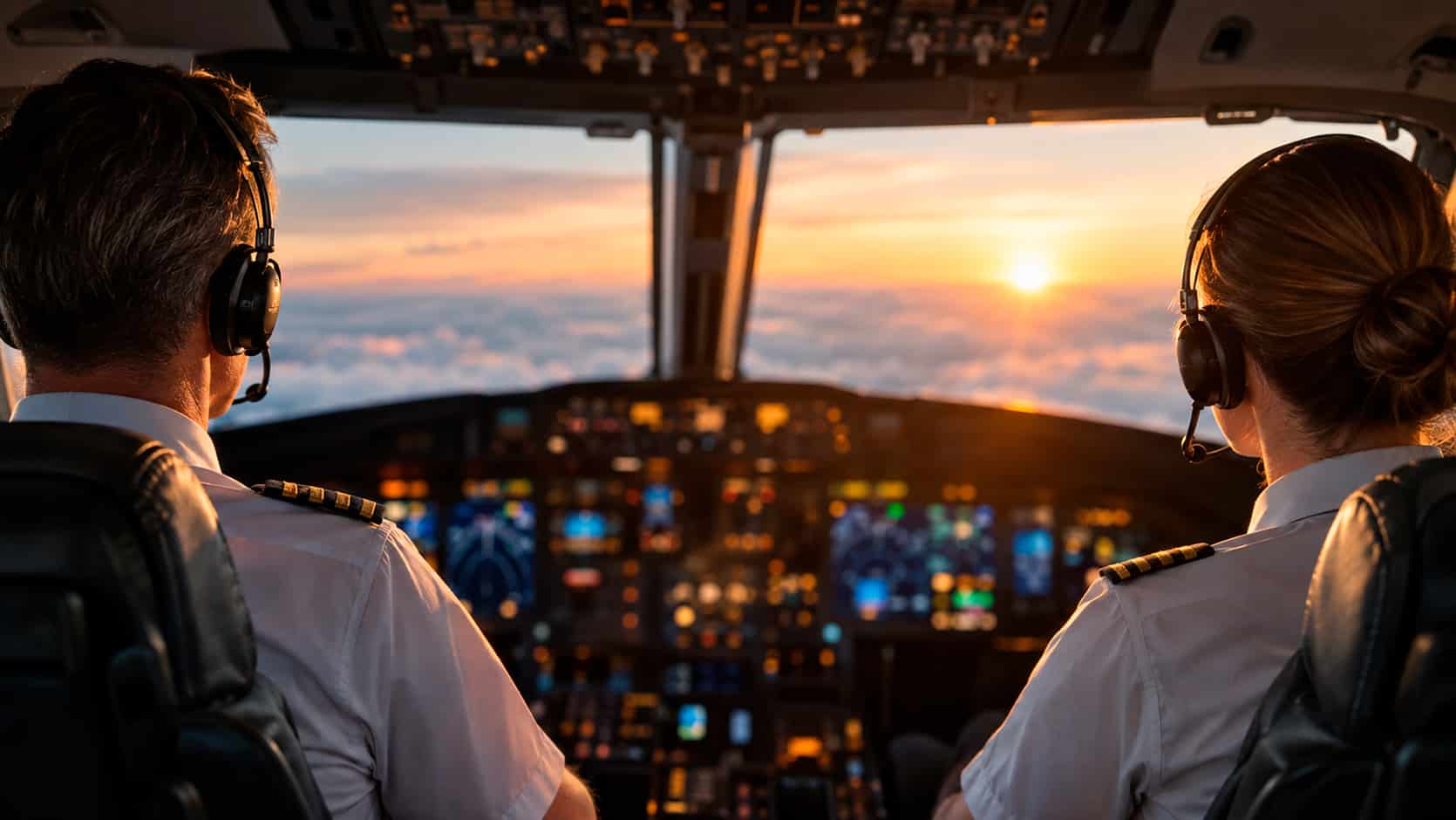
Pilots operate under some of the most tightly regulated work-hour rules of any profession, but the answer to how many hours do pilots work depends heavily on what kind of flying they do. An airline captain, a charter pilot, and a private Part 91 pilot all fall under different rules, with very different limits on flight time, duty time, and required rest.
Here’s what the regulations say, why the rules exist, and what a real-world schedule looks like across commercial aviation.
The Difference Between Flight Time and Duty Time
Before looking at specific numbers, it helps to understand a distinction that trips up a lot of people outside the industry.
Flight Time vs. Flight Duty Period
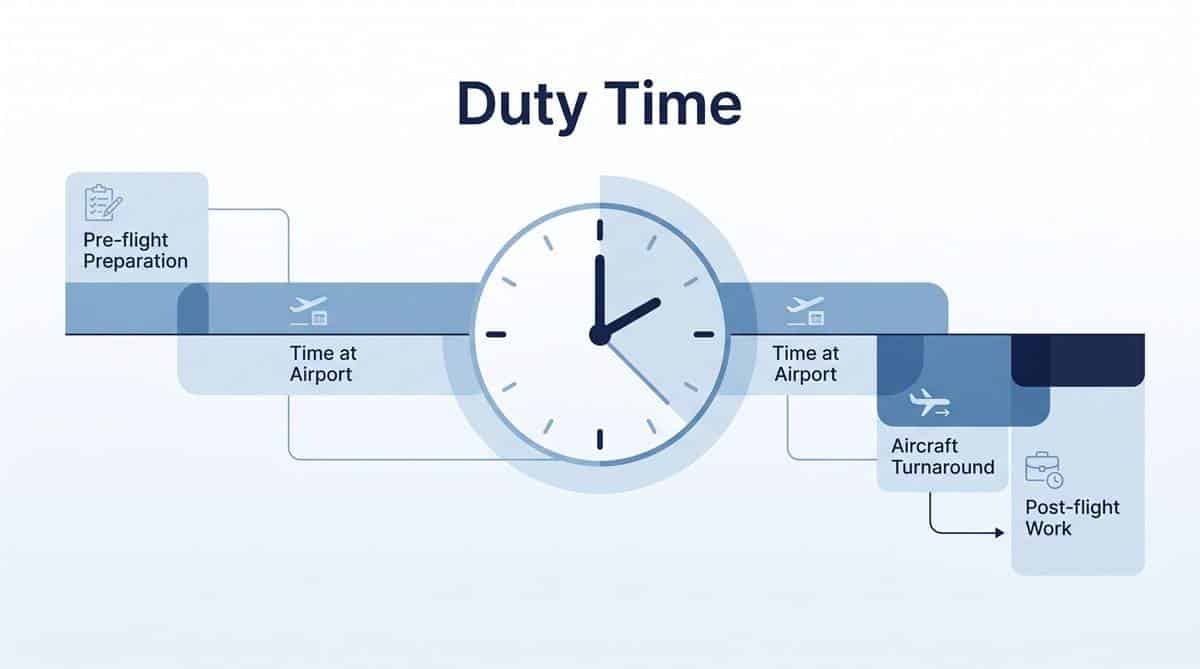
Flight time refers only to the hours an aircraft is actually moving under its own power for the purpose of flight, from the moment it starts taxiing to the moment it comes to rest after landing. A flight duty period (FDP) is much broader. It starts at the pilot’s assigned report time and includes preflight briefings, ground time between legs, and post-flight duties.
So when people ask how many hours do pilots work, the honest answer usually splits into two numbers: how many hours they are actually flying, and how many hours they are on duty overall. The second number is almost always larger.
FAA Part 117: The Rules for Airline Pilots
For pilots flying scheduled passenger operations, the primary rulebook is 14 CFR Part 117, the Federal Aviation Administration’s (FAA) fatigue regulation for airline pilots.
Daily Flight Time and Duty Limits
Under Part 117, a standard two-pilot crew can fly up to 9 hours of flight time within a single duty period, depending on report time and the number of flight segments. Adding a third pilot extends that limit to 13 hours, and a four-pilot augmented crew, common on long international routes, can fly up to 17 hours in a single duty period thanks to onboard rest facilities.
Flight duty period limits run separately from flight time limits. Depending on report time and number of segments flown, an FDP can range from as low as 9 hours for a late-night start with many segments, up to 14 hours for a daytime start with only one or two segments.
Cumulative Limits Over Weeks and Months
Part 117 doesn’t stop at daily limits. It also caps flight time on a rolling basis: no more than 100 hours of flight time in any 672 consecutive hours (28 days), and no more than 1,000 hours in any 365 consecutive calendar days. On the duty side, pilots are capped at 60 flight duty period hours in any rolling 168-hour week, and 190 flight duty period hours in any rolling 672-hour period.
Mandatory Rest Requirements
Before any flight duty period, airline pilots must receive at least 10 consecutive hours of rest, which must include a minimum of 8 uninterrupted hours of sleep. On a weekly basis, pilots are also entitled to at least 30 consecutive hours completely free of duty within any rolling 168-hour period.
How Many Hours Do Pilots Work in Practice?
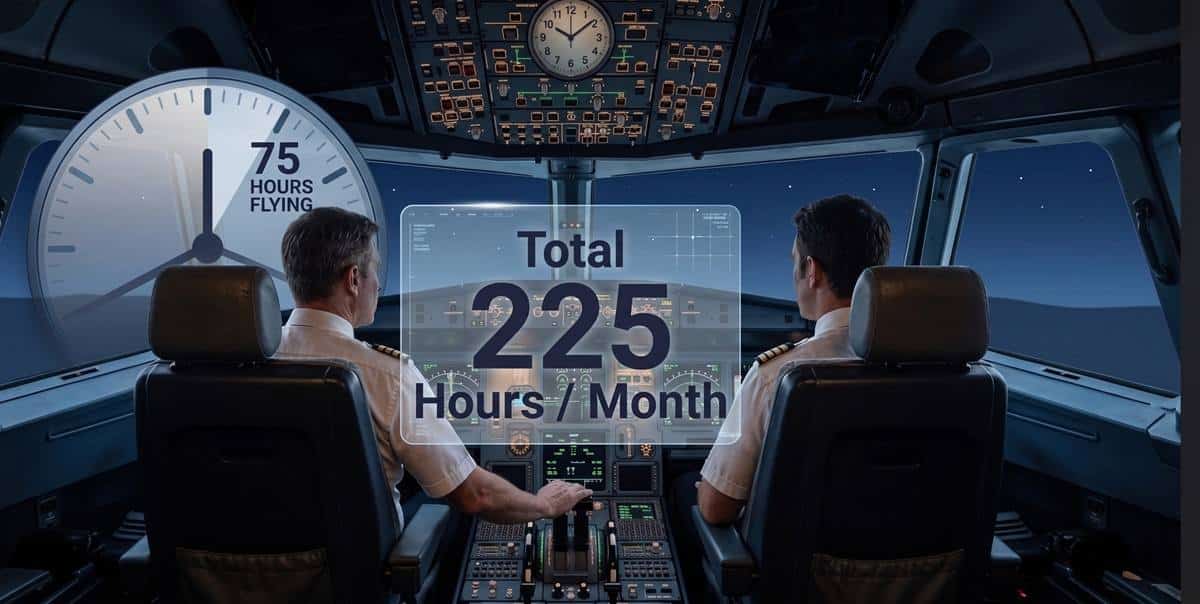
Regulatory limits set the ceiling, but actual schedules usually fall well below the maximum. According to the U.S. Bureau of Labor Statistics, airline pilots fly an average of about 75 hours per month, plus an additional 150 hours per month performing other duties such as checking weather conditions, preparing flight plans, and completing paperwork.
A typical airline pilot’s total monthly workload, flying plus ground duties, lands around 225 hours, spread across a schedule that mixes multi-day work stretches with several days off in a row. Flight assignments are built around seniority, so more experienced pilots tend to get more favorable routes and schedules.
Charter and On-Demand Pilots: Part 135 Rules
Charter and on-demand operations fall under 14 CFR Part 135, which uses a simpler but less protective structure than Part 117.
Flight Time Limits Under Part 135
A single-pilot crew flying unscheduled Part 135 operations is capped at 8 hours of flight time in any 24-hour period. A two-pilot crew can fly up to 10 hours in that same window. Cumulative limits are looser than Part 117 as well, generally allowing up to 1,200 hours per year for scheduled Part 135 operations.
Unlike Part 117, Part 135 rules don’t account for time of day or circadian rhythm, meaning a charter pilot flying through the middle of the night faces the same duty limits as one flying at noon.
Private and Corporate Pilots: Part 91
General aviation pilots operating under 14 CFR Part 91, including private pilots and most corporate flight departments, have no federal daily flight time or duty time limits at all. The responsibility for determining fitness to fly rests almost entirely with the pilot.
The one notable exception is Subpart K, which applies to fractional ownership programs. Under Subpart K, pilots face caps similar to Part 135, including 8 hours of flight time single-pilot or 10 hours with two pilots, along with mandatory rest periods of at least 10 consecutive hours before duty.
Why These Limits Exist: The Fatigue Factor
The entire structure of Part 117 exists because of a well-documented safety problem: fatigue. A 1997 study published in Nature found that after roughly 17 hours of continuous wakefulness, cognitive performance drops to a level comparable to a blood alcohol concentration of 0.05%, above the legal limit in many countries. Stay awake for 24 hours, and the impairment is comparable to a blood alcohol concentration of roughly 0.10%.
Fatigue has been identified as a contributing factor in a meaningful share of aviation accidents, which is why the National Transportation Safety Board (NTSB) kept it on its Most Wanted safety improvements list for nearly three decades. Part 117’s structure, particularly its emphasis on time-of-day and the window of circadian law between roughly 0200 and 0600 local time, was built directly around this research.
Where the Regulatory Gaps Remain
Not every type of flying gets the same fatigue protection, and this remains one of the more debated aspects of how many hours pilots work across the industry.
The Cargo Carve-Out
When Part 117 was finalized, all-cargo operations under Part 121 were excluded entirely. The FAA’s own cost-benefit analysis found that applying the rule to cargo carriers would have cost far more than the safety benefit it produced, so cargo pilots continue operating under the older, less protective Part 121 flight and duty rules rather than Part 117.
Recent Regulatory Movement
The FAA Reauthorization Act of 2024 addressed one specific loophole: the “tail-end ferry flight,” where an operator assigns a Part 91 repositioning leg immediately after a Part 135 duty period, effectively extending a pilot’s actual time at the controls beyond what Part 135 duty limits would normally allow. The law now requires Part 135 operators to account for that fatigue risk within their safety frameworks, though a comprehensive Part 135 duty-time overhaul comparable to Part 117 has not been enacted.
What This Means for Flight Operations and Ground Support
Duty and rest rules don’t just affect the flight deck. Turnaround times, maintenance scheduling, and ground support operations all have to operate within the same windows as flight crews, and any slippage there feeds straight back into the duty clock. When a crew’s duty clock is running, delays caused by slow aircraft turnaround or unexpected ground power issues can push a flight closer to its legal duty limit, forcing a delay or a crew swap that ripples through the rest of the day’s schedule.
This is one of the less obvious reasons reliable ground support equipment matters across commercial and business aviation. A turnaround delayed by a failing ground power unit doesn’t just cost minutes on the tarmac, it can be the difference between a crew legally completing their day and a scramble to find a replacement. Minimizing avoidable delays is what keeps flight crews within their regulated hours without last-minute disruptions to the schedule.
Final Thoughts
So, how many hours do pilots work? The honest answer is that it depends entirely on the type of operation. Airline pilots under Part 117 fly an average of about 75 hours a month but work roughly 225 hours total once ground duties are included, all within some of the strictest fatigue-based regulations in the industry. Charter pilots under Part 135 face looser, less circadian-aware limits, and private or corporate pilots under Part 91 often have no federal hourly limits at all.
Understanding how many hours pilots work, and why those hours are regulated the way they are, offers a clearer picture of just how much of aviation safety depends on managing human performance, not just aircraft performance.