
What Are the Types of Locomotive Engines?
Table of Contents
Locomotive engines, also called train engines, come in three main types: steam, diesel and electric. Steam locomotives burn coal or wood to make steam, diesel locomotives burn diesel fuel, and electric locomotives draw power from overhead wires or a third rail. Battery, hydrogen and hybrid locomotives are newer options.
Types of Locomotive Engines on Railroads
Steam
Diesel
Electric
There are three primary types of locomotive engines: steam, electric, and diesel. Each possesses its own distinct method of generating the necessary power to transport substantial cargo over extensive distances. Let’s take a closer look:
Steam Engine Locomotives
Imagine a colossal metal beast, billowing smoke and chugging along the tracks. That’s the iconic image of a steam locomotive. Hydrogen fuel cell locomotives combine hydrogen with oxygen from the air in a fuel cell to produce electricity, which powers the traction motors. The only emission at the locomotive is water vapor.
How Steam Locomotives Work
- Burning Fuel: Coal or wood is introduced into a firebox, causing the water in a boiler to reach high temperatures.
- Steam Production: Water supplies that have been heated reach their boiling point, resulting in the generation of steam power under significant pressure.
- Powering the Wheels: Through the application of steam, pressure is exerted on pistons housed within cylinders. These pistons are then interconnected with rods and cranks, consequently initiating the rotation of the wheels.
Types of Steam Locomotives
Steam locomotives were available in various arrangements, with each one tailored to perform specific duties.
- Modern passenger locomotives are designed to be more streamlined and lightweight, equipped with larger driving wheels to enable faster speeds.
- Freight locomotives are built to be sturdier, featuring smaller wheels to enhance their hauling capacity.
- Switchers are employed to manipulate cars within yards, renowned for their small dimensions and capacity to travel in both forward and reverse directions.
Historical Significance and Decline
During the Industrial Revolution, steam locomotives played a critical role by facilitating the transportation of goods and passengers, ultimately transforming the landscape of transportation.
Nevertheless, these locomotives were not without their limitations. Ineffectiveness, labor intensity, and the emission of substantial air pollutants characterized their operation. With the advancement of technology, cleaner and more efficient alternatives surfaced, resulting in the decline of steam engines during the mid-20th century.
Steam locomotives are also classified by wheel arrangement using Whyte notation, which counts the leading, driving and trailing wheels. For example, a 4-6-2 is known as a “Pacific” and a 2-8-0 as a “Consolidation”.
Electric Engine Locomotives
Electric locomotives serve as the contemporary powerhouses of electrified railway systems. Instead of consuming fuel on the locomotive, they receive electrical power either from an elevated wire or a third rail.
Operation Principle
Electricity reaches the locomotive through a pantograph, the arm that touches the overhead wire, or through a collector shoe that slides along a third rail.
Types Based on Power Source
There are additional classifications for electric locomotives, which are determined by the source of their high power and locomotive power supply:
- AC electric locomotives run on alternating current.
- DC electric locomotives run on direct current.
For typical voltage levels, see what voltage locomotives use.
Benefits and Limitations
Electric locomotives present several benefits, such as operating in a more environmentally friendly manner, offering improved efficiency, and delivering formidable acceleration. However, their usage is restricted to electrified railway tracks, which necessitate substantial initial investment for construction and ongoing maintenance.
Diesel Engine Locomotives
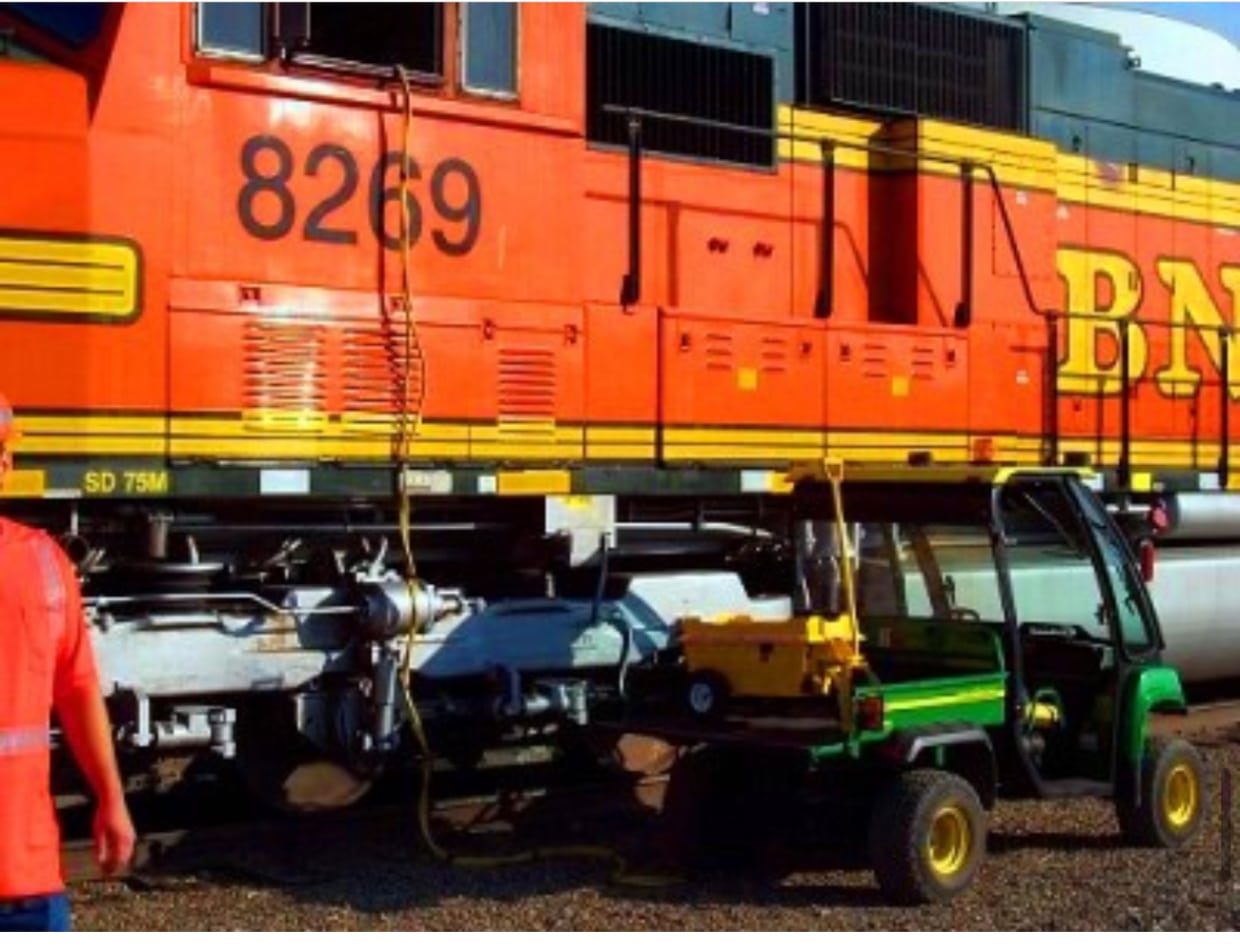
Within the different types of locomotive engines, we find diesel locomotives. These exert a significant influence on railway lines that lack electrification, serving as self-sustained powerhouses equipped with their diesel fuel supply.
Diesel-Electric Locomotives
The prevalent variant of diesel locomotive is the diesel-electric type. The following outlines the procedure involved:
- Diesel engines, resembling those commonly present in trucks, operate by combusting diesel fuel to produce mechanical energy.
- Electrical power is generated by harnessing the rotational motion of the engine to turn a generator.
- Traction motors rely on electric power to drive the rotation of the wheels.
This design presents multiple benefits: diesel engines deliver efficient electricity production, while electric motors offer seamless and robust traction.
Diesel-Hydraulic and Diesel-Mechanical Locomotives
Although not as prevalent, there are alternative variants of diesel locomotives.
- Diesel-hydraulic locomotives employ a hydraulic transmission system for transmitting power from the engine to the wheels, akin to the mechanism found in an automatic transmission of a car.
- Diesel-mechanical locomotives utilize a mechanical transmission system that incorporates gears, akin to those found in manual transmissions of automobiles.
Advantages and Uses
Diesel locomotives demonstrate remarkable adaptability, functioning on non-electrified paths to accommodate both passenger and cargo heavy trains. They provide a commendable equilibrium between potency, efficacy, and operational distance.
Hybrid Locomotives
Hybrid locomotives merge components from various engine types. To illustrate, a diesel-electric hybrid could employ a compact diesel engine in conjunction with energy-storing devices such as batteries or capacitors to enhance efficiency and minimize emissions.
Emerging Technologies in Locomotive Engines
With the increasing emphasis on sustainability, innovative technologies are emerging within the realm of locomotive engines.
Battery Electric Locomotives
Battery Electric locomotives bear a resemblance to electric locomotives, yet they possess their internal energy supply in the form of sizable, rechargeable batteries. As a result, the reliance on overhead wires or a third rail is eliminated, rendering them compatible with non-electrified railway tracks.
Although the range of locomotive batteries is presently less extensive than that of diesel locomotives, there is a continuous enhancement in battery technology that makes them a prospective choice for shorter-distance journeys or maneuvering tasks within rail yards.
Hydrogen Fuel Cell Locomotives
Hydrogen fuel cell technology presents an additional promising potential for environmentally friendly locomotives. These types of locomotive engines utilize a combination of hydrogen gas turbines and oxygen to create electricity via an electrochemical process, resulting in the emission of solely water vapor. Offering the potential for emission-free operation, this technology presents a compelling option for the future of environmentally friendly rail transportation. Nevertheless, advancements in hydrogen production and distribution infrastructure are necessary for its widespread implementation.
Comparing Locomotive Engines: Steam vs Diesel vs Electric
There are various factors that come into play when selecting the appropriate type of engine for a locomotive.
| Engine type | Power source | Emissions at the locomotive | Best suited for |
|---|---|---|---|
| Steam | Coal or wood, plus water | Smoke and air pollutants | Historic and heritage railways |
| Diesel | Diesel fuel | Exhaust emissions | Non-electrified freight and passenger lines |
| Electric | Overhead wire or third rail | None at the locomotive | Electrified main lines and urban rail |
| Battery electric | Onboard rechargeable batteries | None at the locomotive | Shorter routes and yard work |
| Hydrogen fuel cell | Hydrogen and oxygen | Water vapor only | Emerging option for non-electrified routes |
- When considering the features of a route, the presence of electrified tracks makes electric locomotives a highly favorable option.
- The type and weight of a train play a role in engine selection, as passenger trains generally demand less pulling force compared to bulky freight trains.
- In evaluating locomotive battery voltage, it is important to take into account the range limitations imposed by distance and operational requirements.
- Environmental regulations heavily rely on emissions standards, which are instrumental in promoting cleaner technologies such as electric or hydrogen fuel cells.
Steam, diesel and electric locomotives remain the three main types of locomotive engines, and diesel-electric is the most common design on non-electrified lines. Battery, hydrogen and hybrid technologies are growing as railways look to cut emissions. START PAC® supplies starting and power solutions for rail; see our locomotive power supplies.
FAQ
What engines do trains use?
Trains use steam, diesel or electric locomotive engines. Newer trains also use batteries, hydrogen fuel cells or hybrid systems.
What is the most common type of locomotive engine?
In North America, diesel-electric locomotives are the most common. On electrified railways, such as many in Europe and Asia, electric locomotives are widely used.
How does a train engine work?
It depends on the type: steam locomotives use steam pressure on pistons, diesel-electric locomotives use a diesel engine to drive a generator that powers traction motors, and electric locomotives take power from overhead wires or a third rail. See how a train engine works for a closer look.
Are electric locomotives AC or DC?
Both exist. Electric locomotives run on AC or DC depending on the railway’s electrification system.
What is the difference between a locomotive and a train?
A locomotive is the powered unit that pulls or pushes the cars, while a train is the locomotive plus the cars it hauls. Read locomotive vs train for the full comparison.